Fashion runs about five years ahead of interiors on the nostalgia cycle, and if you've watched what's happened to clothing over the last few years — the wide-leg trousers, the warm earth tones, the suede and fringe — you already know what's coming for your living room. The 1970s revival is here, it's broad, and …
Fashion runs about five years ahead of interiors on the nostalgia cycle, and if you’ve watched what’s happened to clothing over the last few years — the wide-leg trousers, the warm earth tones, the suede and fringe — you already know what’s coming for your living room. The 1970s revival is here, it’s broad, and it’s not going anywhere soon.
The question isn’t whether to engage. It’s which parts are worth bringing back and which are best left in the archive.
What’s Worth Bringing Back
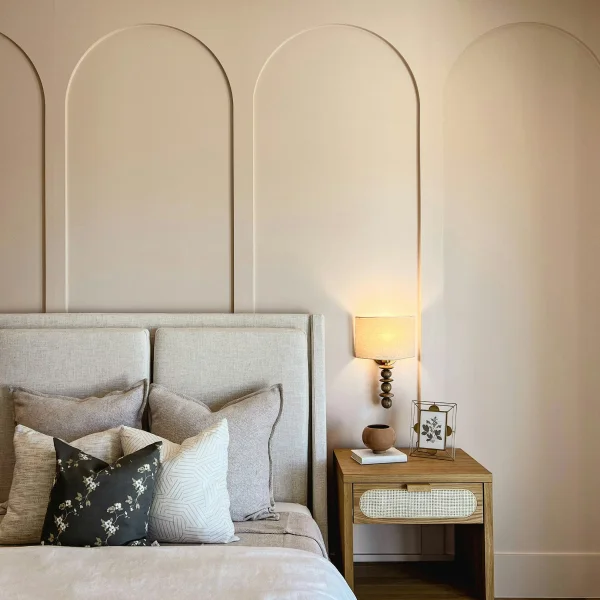
Rattan and cane. The appeal of rattan and wicker — light, breezy, organic — is having a genuine 21st century revival, and rightfully so. The update is in how it’s used: edited rather than everywhere. A single rattan chair among contemporary furniture. A cane-front cabinet as one element rather than the organizing principle of the whole room. The material earns its place through contrast rather than repetition.
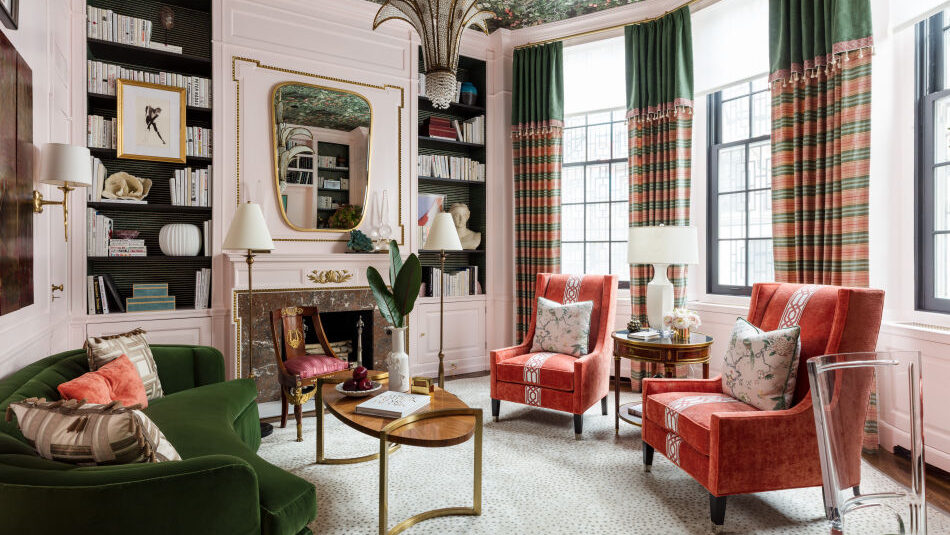
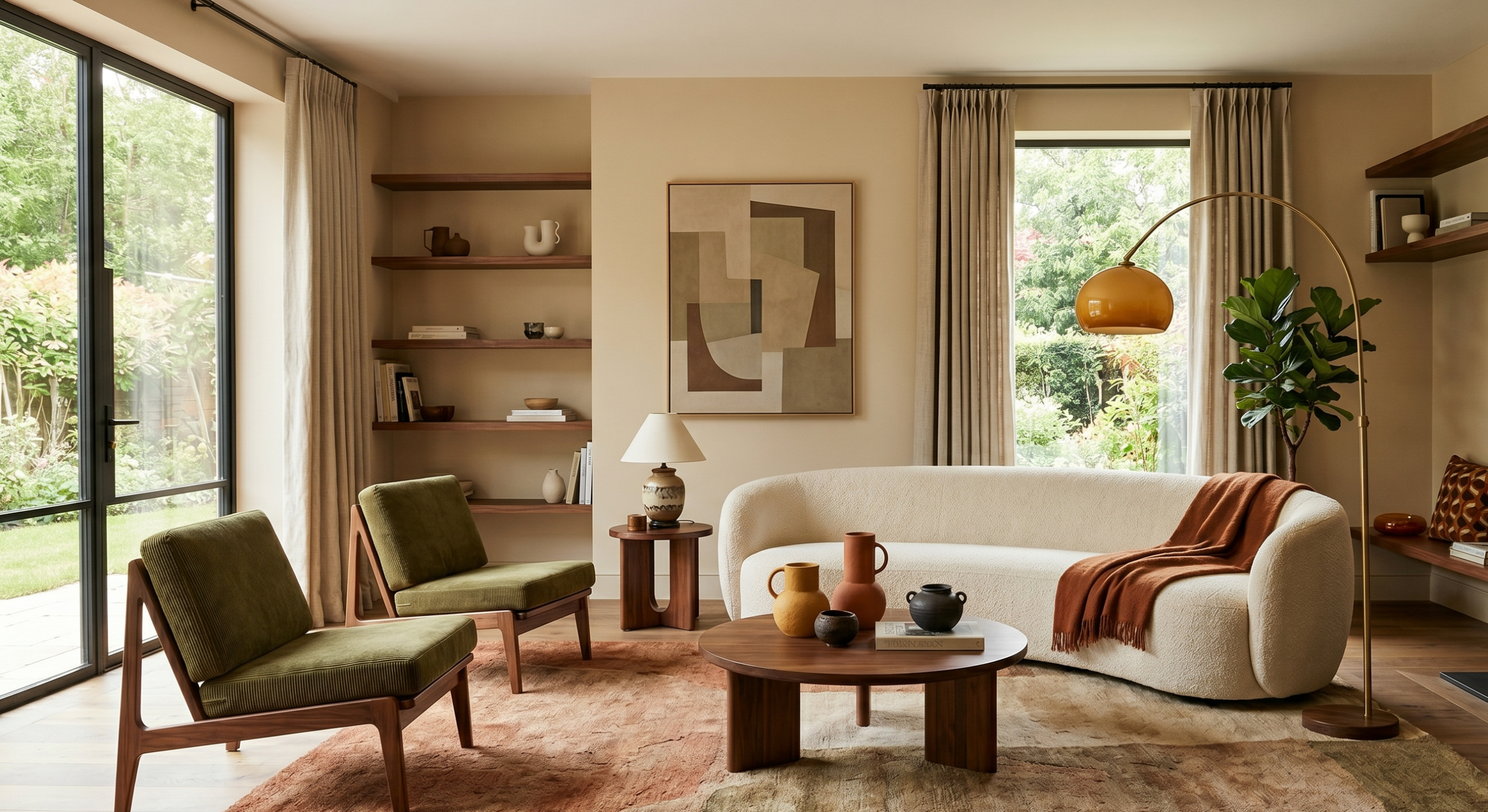
Warm earth tones. The 1970s palette is rooted in nature — rich greens, muted oranges, warm browns that echo forest floors and autumn skies. These earth tones pair beautifully with rattan, walnut, and natural materials, creating a space that feels grounded and timeless. The update is subtlety: terracotta rather than burnt orange, warm brown rather than avocado, deep moss rather than chartreuse. The emotional quality — warm, organic, grounded — translates beautifully. The specific original colorways mostly don’t.
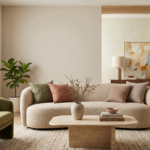
Low, sculptural furniture. The deep, enveloping sofa that sits close to the floor and invites you to stay for hours is exactly where the furniture market is heading. The sunken conversation pit isn’t coming back — too much architecture required — but its spirit, that sense of settling in and not being in a hurry to leave, absolutely is.
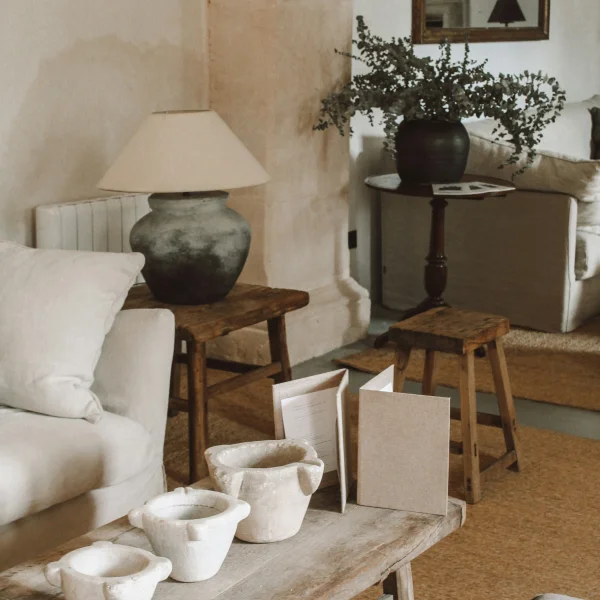
Statement lighting. The 1970s produced some of the best lamp design of the twentieth century — sculptural bases, warm ambient glow, globe pendants. Vintage finds from this era are among the best categories to hunt at estate sales and on eBay. The quality of originals is often considerably better than modern reproductions, and unlike vintage upholstery, vintage lighting requires almost no restoration.
Organic wall art. The decade had a deep instinct toward art that connected interiors to the natural world — mountain landscapes, organic abstraction, dimensional wall pieces in natural materials. That instinct is completely current. Anthem’s hand-welded metal pieces are a 2026 expression of exactly this quality: dimensional, warm-toned, landscape-driven, made with genuine craft. The Crestfall above a low linen sofa in a room with rattan accents and terracotta walls reads as of-the-moment while honoring everything good about the era it’s in conversation with.
Layered texture. Velvet, bouclé, natural fiber rugs, a single macramé piece rather than thirty of them. Texture is now the foundation of how rooms are designed — even minimal spaces gain richness through thoughtful textile layering.
What to Leave Behind
Wall-to-wall shag carpet. Modern shag works best as area rugs in muted, neutral tones — texture and warmth without the heaviness of the original. The wall-to-wall version had its moment.
Avocado and harvest gold as primary colors. These read as pastiche immediately. Deep olive and warm ochre capture the spirit without the period-costume effect.
Heavy dark wood paneling on every wall. One paneled wall in a lighter or painted finish gives you the warmth. Four walls closes in on itself in a way that’s hard to live with.
Macramé overload. One well-chosen piece works — a wall hanging, a plant hanger. The moment you have macramé on multiple walls and in multiple corners, the room tips from referencing the decade to being trapped in it.
Matching earth tone sets. The original error was color-matching every surface — burnt orange carpet, burnt orange drapes, burnt orange pillows. The update is mix rather than match: the same warm family, different values, different materials.
The Underlying Argument
The reason the 1970s keeps coming back isn’t nostalgia for avocado appliances. It’s the underlying values: warmth, organic materials, connection to the natural world, rooms that feel inhabited rather than staged. Those aren’t dated values. They’re exactly what 2026 is looking for.
The revival works best when it honors the feeling rather than the iconography. Earth tones because they’re warm, not because they’re retro. Rattan because it’s organic and beautiful, not because it’s a period reference. Art that connects the room to the landscape, because that instinct — toward nature, toward organic form, toward things made by hand — is more current than ever.