Japandi is the bedroom aesthetic that actually delivers on the promise of rest. Here’s the complete guide — furniture, bedding, lighting, and the specific products worth buying.


Japandi — the marriage of Japanese minimalism and Scandinavian warmth — makes its most complete argument in the bedroom. This is the room where the promise of the aesthetic is most tangible: a space that removes everything unnecessary and keeps only what contributes to rest. No clutter. No visual noise. No surfaces that demand attention when your brain is still quiet.
The Bed: Low, Solid, Natural
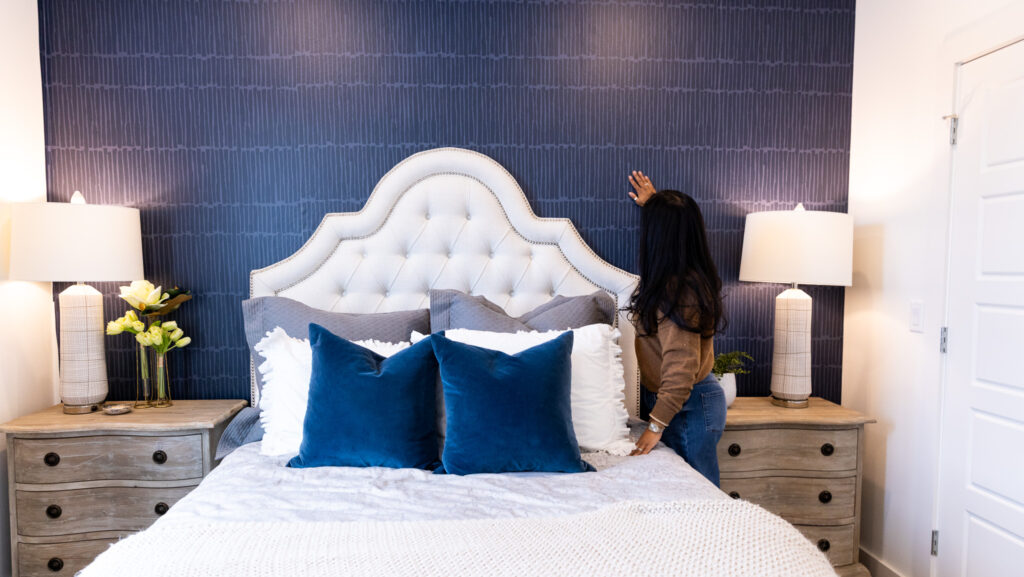
The bed frame is the room’s foundation. Japandi calls for low-profile platform beds in solid wood — oak, walnut, or ash with a matte or lightly oiled finish. No upholstered headboards. No metal frames. West Elm’s Anton Solid Wood Bed — crafted from solid mango wood in a Burnt Wax finish that shows the natural grain — is the right call: low, clean-lined, warm without being rustic.
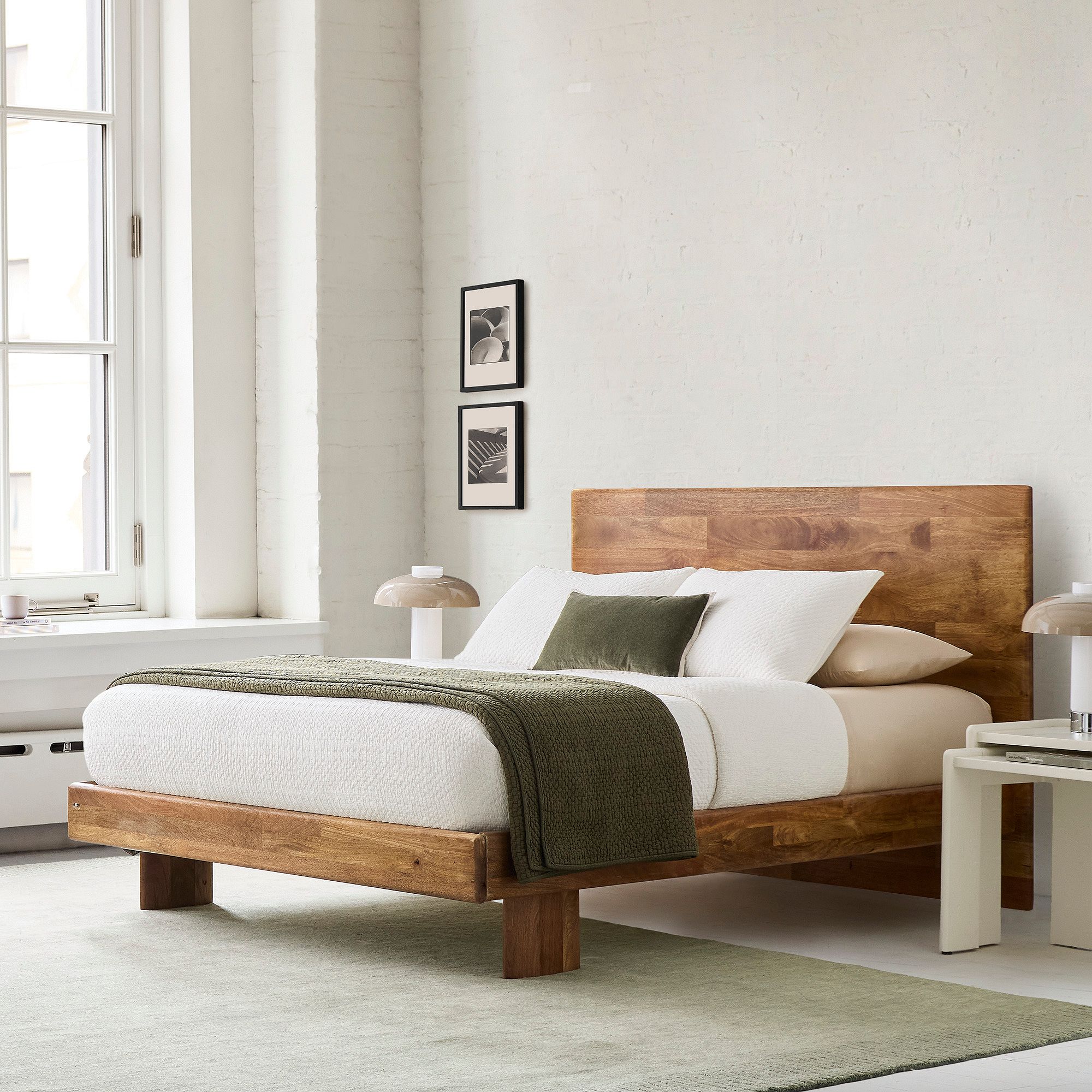
→ West Elm platform beds in solid wood
The Bedding: Linen, Always
Japandi bedding is linen in a neutral tone — Fog, bone, warm flax, or soft sage. Not crisp white, which reads as too clinical. Parachute’s Linen Duvet Cover Set — made in Portugal from 100% European flax, OEKO-TEX certified, CNN’s Best Linen Sheets — is the benchmark. The fabric softens with every wash.
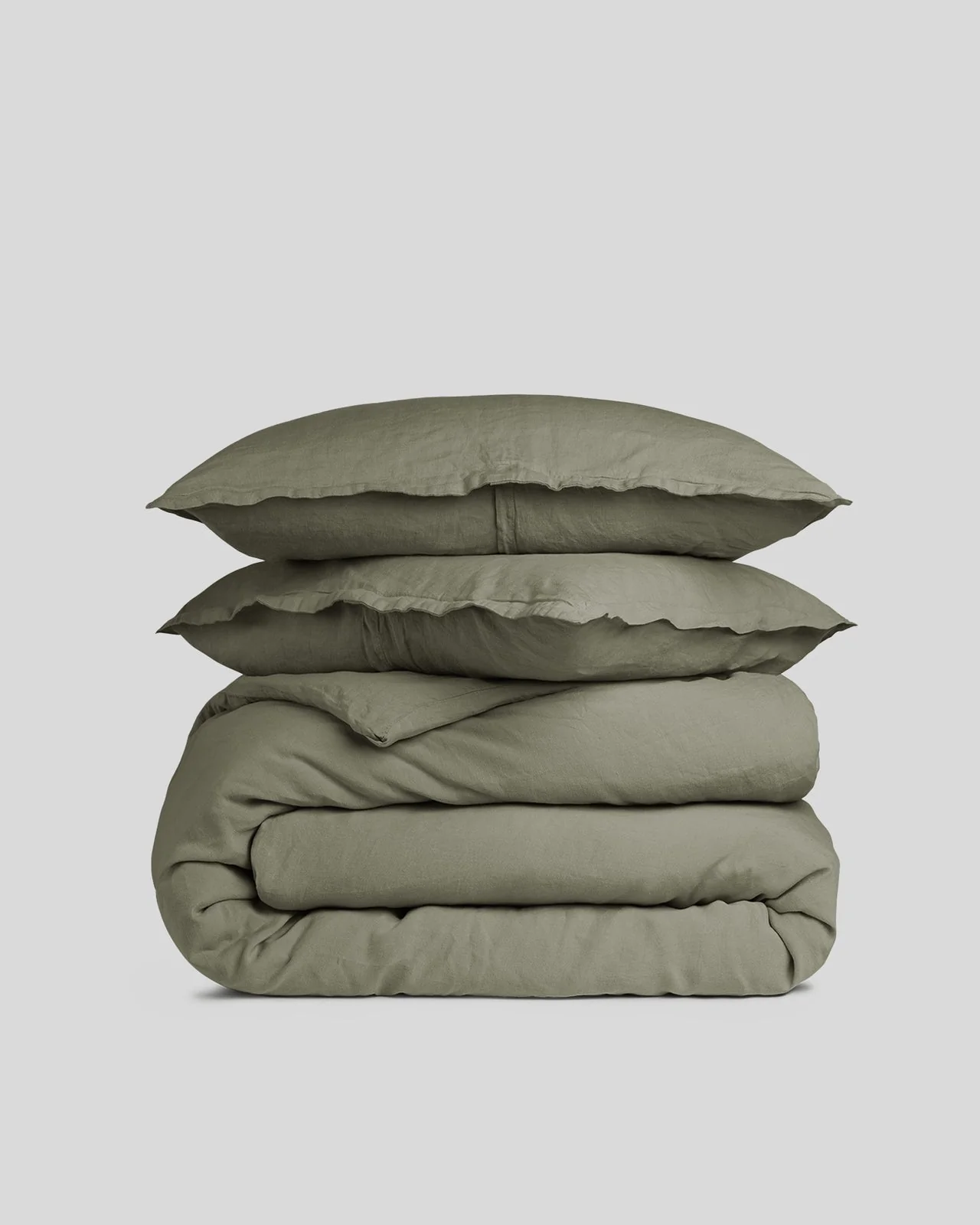
→ Parachute Linen Duvet Cover Set — from $179 (full/queen)
The Wallpaper: Specific Japanese Character
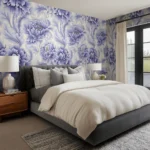
A Japandi bedroom rewards wallpaper that has genuine Japanese aesthetic character — not just quiet pattern, but something that carries the specific quality of Japanese illustration or nature philosophy.
Painted Paper’s Crane Ballet — elegant cranes in a botanical setting, the kind of pattern that evokes Japanese screen painting — is one of the most Japandi-specific patterns in the range. Considered, precise, deeply calm.

→ Painted Paper Crane Ballet Wallpaper
For a more overtly Japanese reference: Painted Paper’s Koi Serenity — the graceful dance of koi fish in vivid colors — brings the Japanese garden tradition directly into the bedroom. Their product description calls it a peaceful oasis, and it earns that description.

→ Painted Paper Koi Serenity Wallpaper
For a quieter Japandi option: Painted Paper’s Kenji — a restrained Japanese-inflected botanical in soft tones — creates a headboard wall that adds depth without demanding attention.

→ Painted Paper Kenji Wallpaper
From Lemon Park, Alta brings confident, contemporary pattern energy in a calmer register — more graphic than botanical, better for rooms that want Japandi structure without deep tones. Renter-friendly peel-and-stick.

The Lighting: Two Bedside, No Overhead
Japandi lighting eliminates overhead fixtures as the primary light source. Two bedside lamps — warm-toned (2700K), paper or linen shade, simple wooden base — provide ambient light at the right height for evening wind-down. The Noguchi Akari paper lamp is the canonical reference and worth buying if budget allows: sculptural, soft-diffused, unmistakably right.
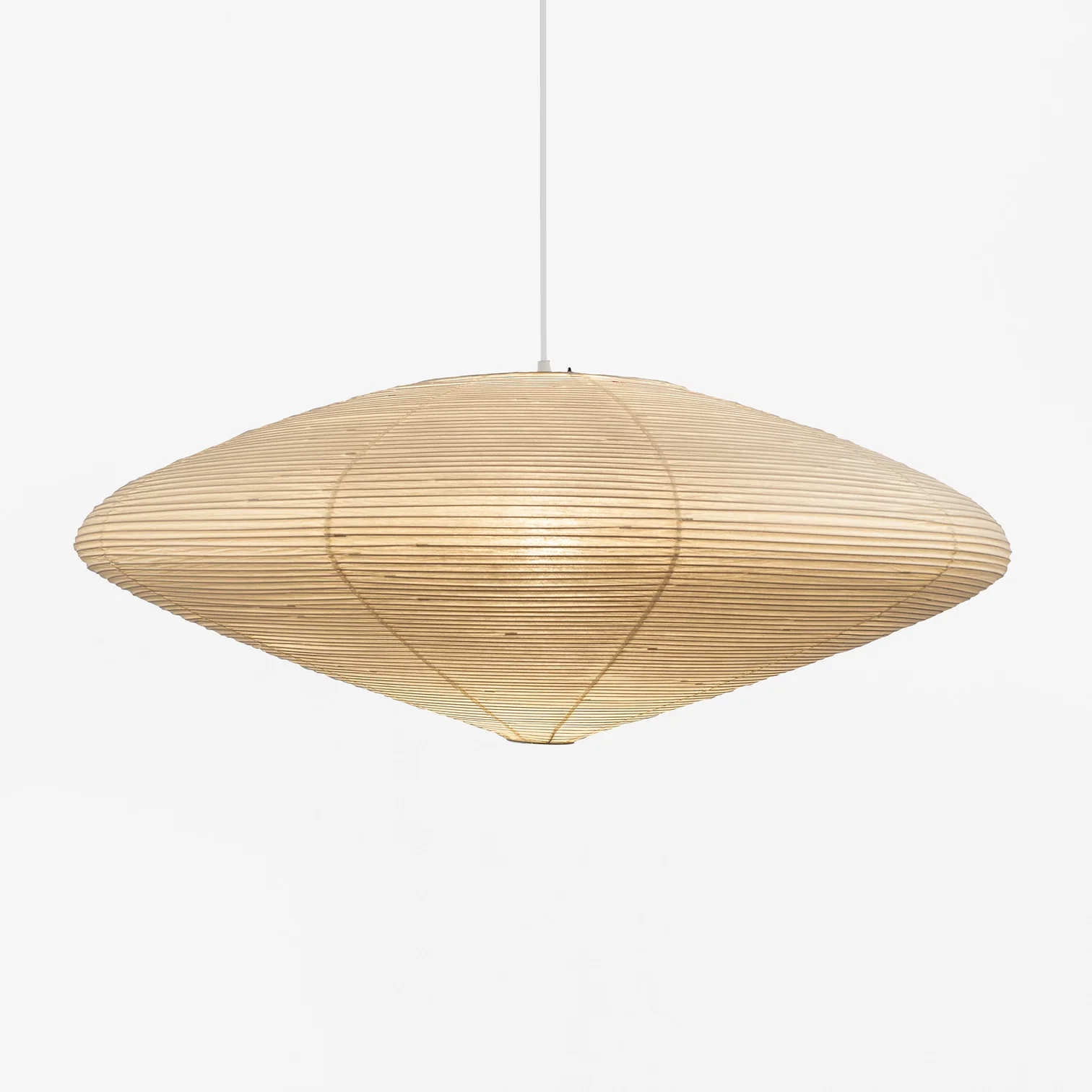
→ Noguchi Akari lamp — from $150
The Objects: Three at Most
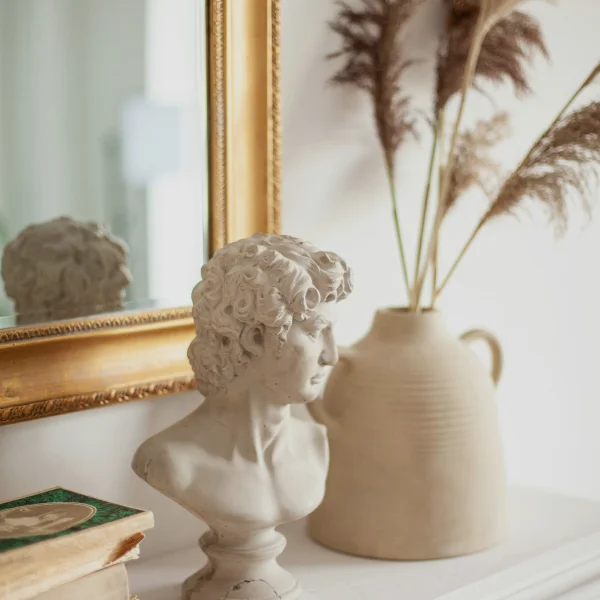
A Japandi bedroom’s surfaces hold: one handmade ceramic piece, one plant, one meaningful object. Not a collection. The empty surfaces are as intentional as the objects on them. For the ceramic: search Etsy’s wabi-sabi pottery section for handmade stoneware in earthy glazes — the imperfections are the point.