Biophilic design — the practice of connecting interior spaces to the natural world — is one of 2026’s most significant design movements. Here’s how to do it in a real home without a contractor or a horticulture degree.

Biophilic design is based on a simple premise: humans evolved in natural environments, and our nervous systems respond differently to spaces with natural materials, natural light, organic forms, and living things than they do to spaces without them. The research is consistent — rooms with plants, natural materials, and access to daylight reduce cortisol, improve focus, and create a measurable sense of calm.
The living wall version of biophilic design — the kind you see in hotel lobbies and design publications — requires irrigation systems, grow lights, and maintenance contracts. That’s not what most people need. What most people need is a less clinical approach: natural materials, considered plant placement, and surfaces that reference the natural world rather than fighting against it.
Start With the Plants
The right plants for biophilic design are the ones that actually survive in your specific conditions. The most visually impactful — the fiddle leaf fig, the bird of paradise, the olive tree — also require the most care and the most light. Start with what your space can support.
2026 is officially the Year of the Ficus, with plant trend forecasters calling out the fiddle leaf fig, rubber plant, and weeping fig as the architectural anchors for biophilic living rooms. All three need bright, indirect light and some consistency in care — but the visual payoff, particularly for the fiddle leaf fig in a large corner, is significant.
For genuinely low-maintenance biophilic design: the snake plant (Sansevieria) survives in low light and requires watering roughly once a month. In multiples — three of varying heights in the same corner — it creates the same vertical structure as a fiddle leaf fig with a fraction of the care requirement. The ZZ plant is similarly indestructible and adds glossy, architectural foliage to rooms with very little light.
The indoor olive tree — compact, silver-green, Mediterranean — is having a significant moment in 2026 for rooms that want a softer, more sculptural form than the bold tropical options.
The Botanical Wallpaper as Biophilic Element
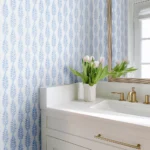
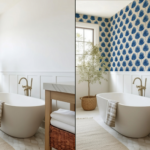
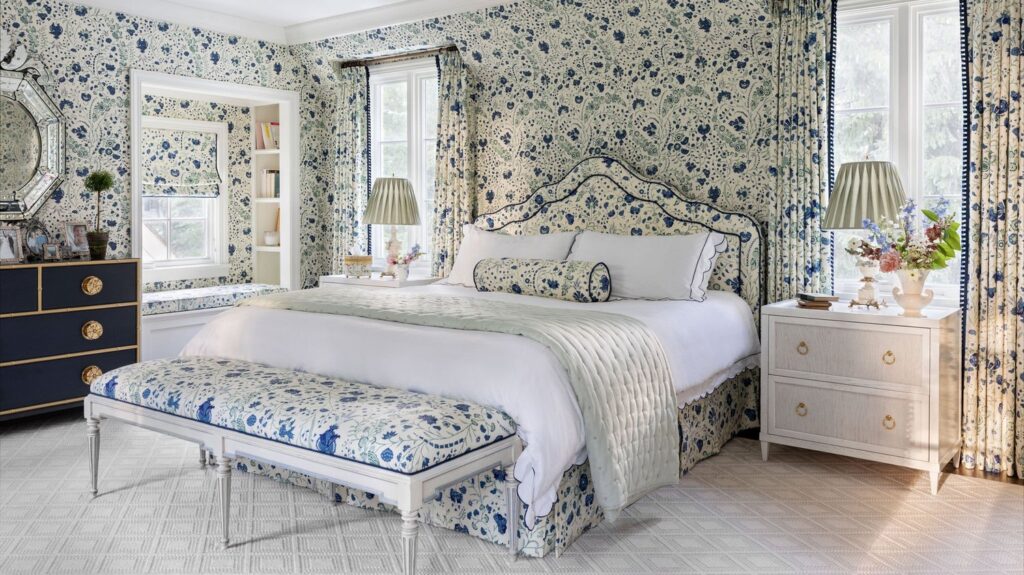
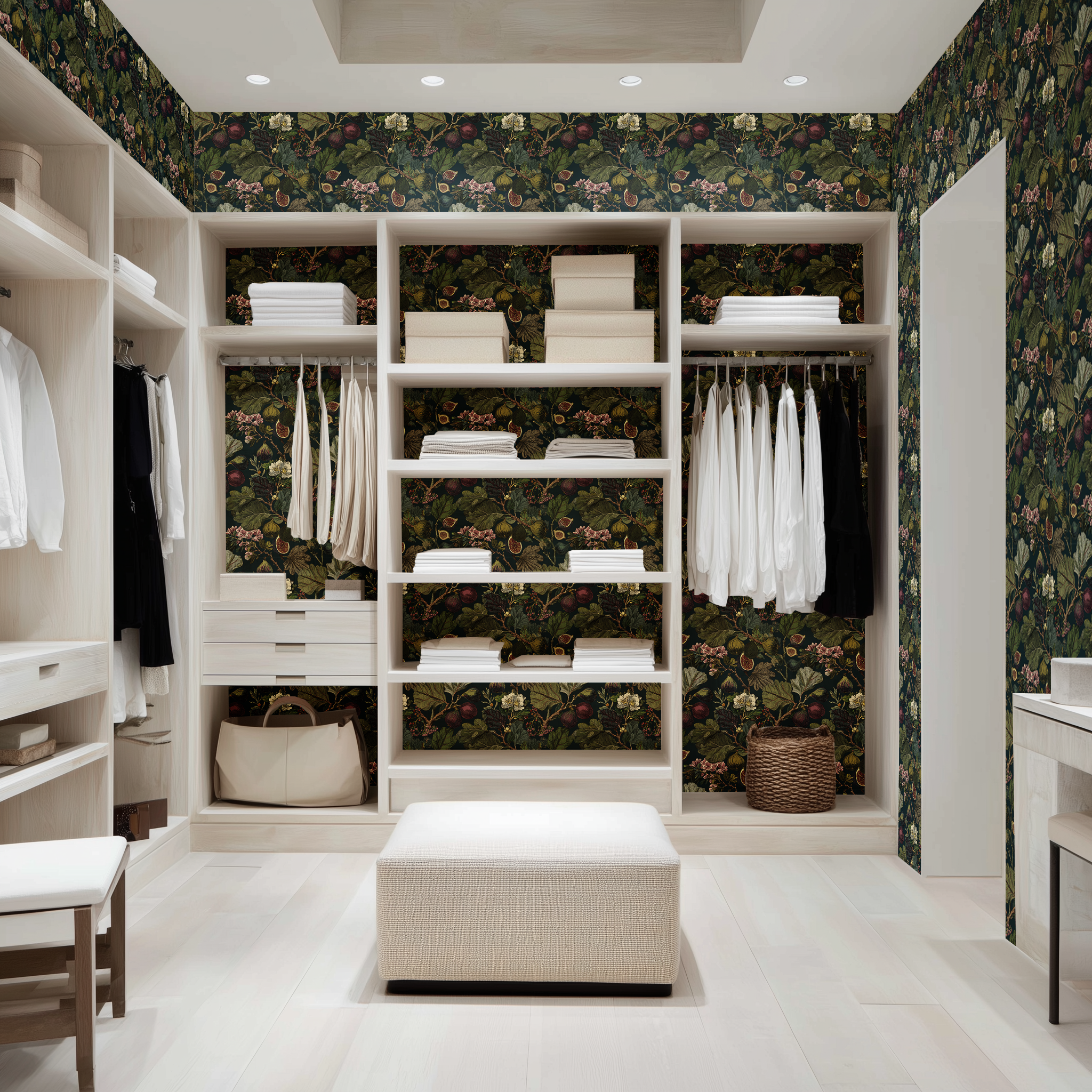
Wallpaper that references the natural world — botanical illustration, forest, garden — creates the indirect nature experience that biophilic research identifies as genuinely restorative. It’s not a replacement for living plants but it’s a genuine addition to the biophilic environment.
Painted Paper’s Wild Fig Grove — a lush, layered fig and botanical illustration — creates a wall that feels like it grew rather than was applied. The organic complexity rewards close inspection in a way that activates the same restorative response as actual foliage.

→ Painted Paper Wild Fig Grove Wallpaper
For a forest-quality botanical wall: Painted Paper’s Enchanted Grove — dense, dimensional, alive with detail — creates the full-room immersion that biophilic design is built around.

→ Painted Paper Enchanted Grove Wallpaper
From Lemon Park, Forest Dusk — deep forest tones at the quality of last light through trees — creates the most immersive biophilic wall environment in renter-friendly peel-and-stick format.

→ Lemon Park Forest Dusk Wallpaper
Natural Materials: The Foundation
Biophilic rooms prioritize natural over synthetic at every surface. Wood over laminate. Linen over polyester. Jute or wool over synthetic pile. Stone or ceramic over plastic. The Pottery Barn Chunky Wool Jute Rug (from $149) is one of the most accessible and effective biophilic floor choices — the combination of wool and jute creates exactly the organic, natural-material floor surface the design philosophy calls for.
Light: The Non-Negotiable
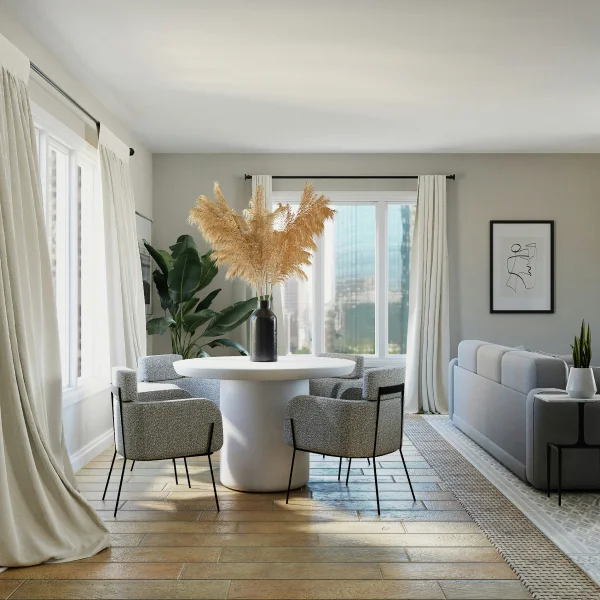
Natural light is the most fundamental biophilic element. Maximize it: remove or replace heavy window treatments with sheer linen, move furniture away from windows, use mirrors opposite windows to reflect daylight deeper into rooms. Sheer linen curtains from Pottery Barn’s Belgian Flax Linen collection let daylight filter through while maintaining privacy — the biophilic equivalent of choosing indirect natural light over artificial lighting.
The Art
Biophilic rooms respond well to art with landscape or natural subject matter. Anthem Classic’s hand-welded metal wall art — mountain and landscape forms in dimensional steel — brings the outdoor landscape inside with genuine material presence.

→ Anthem Classic landscape wall art — made in the Ozarks, free shipping