The best metal wall art for living rooms in 2026. Specific product recommendations from Anthem, sizing guidance, finish options, and exactly how to hang large-scale metal art above a sofa.
Wall art above the sofa is the design decision most people leave too long, resolve too quickly, or get almost right. Too small is the most common outcome — a piece that floats in the center of a large wall, creating the impression that the room is unfinished rather than designed. The right piece, at the right scale, in the right material, is what makes a living room feel considered.
Metal wall art occupies a category that canvas prints and framed photography can’t touch: it has physical dimension, it responds to light rather than simply reflecting it, and it reads as significant — an object with weight and permanence — rather than decorative. Here’s what to look for and the specific pieces worth knowing.
Why Metal Wall Art Works in Living Rooms
Dimensional art changes the room differently at different times of day. A patinated metal piece in morning light looks different from the same piece under a warm lamp in the evening. The shadows and depth created by the relief surface add a layer of visual complexity that flat art — however beautiful the image — simply cannot replicate.
Metal also ages well. A properly finished piece develops character over time rather than fading or yellowing. In a room designed to look gathered and lived-in, a piece of hand-welded metal art contributes to that quality in a way that mass-produced prints don’t.
The Anthem Collection
Anthem makes hand-welded metal wall art in the Ozarks from solid 14-gauge American steel, precision cut and finished in warm patinated tones. Each piece takes 5–7 weeks and is made to order. The collection is organized around landscape themes — mountain ridgelines, terrain silhouettes, organic forms — in finishes that read warm and dimensional against almost any wall color.
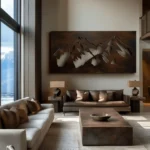
The Crestfall — A jagged ridgeline rendered in steel, finished in Umber patina — dark brown with a smoky, matte quality. One of Anthem’s strongest pieces for living rooms above a sofa: the horizontal landscape orientation and the strong silhouette make it decisive without being loud.
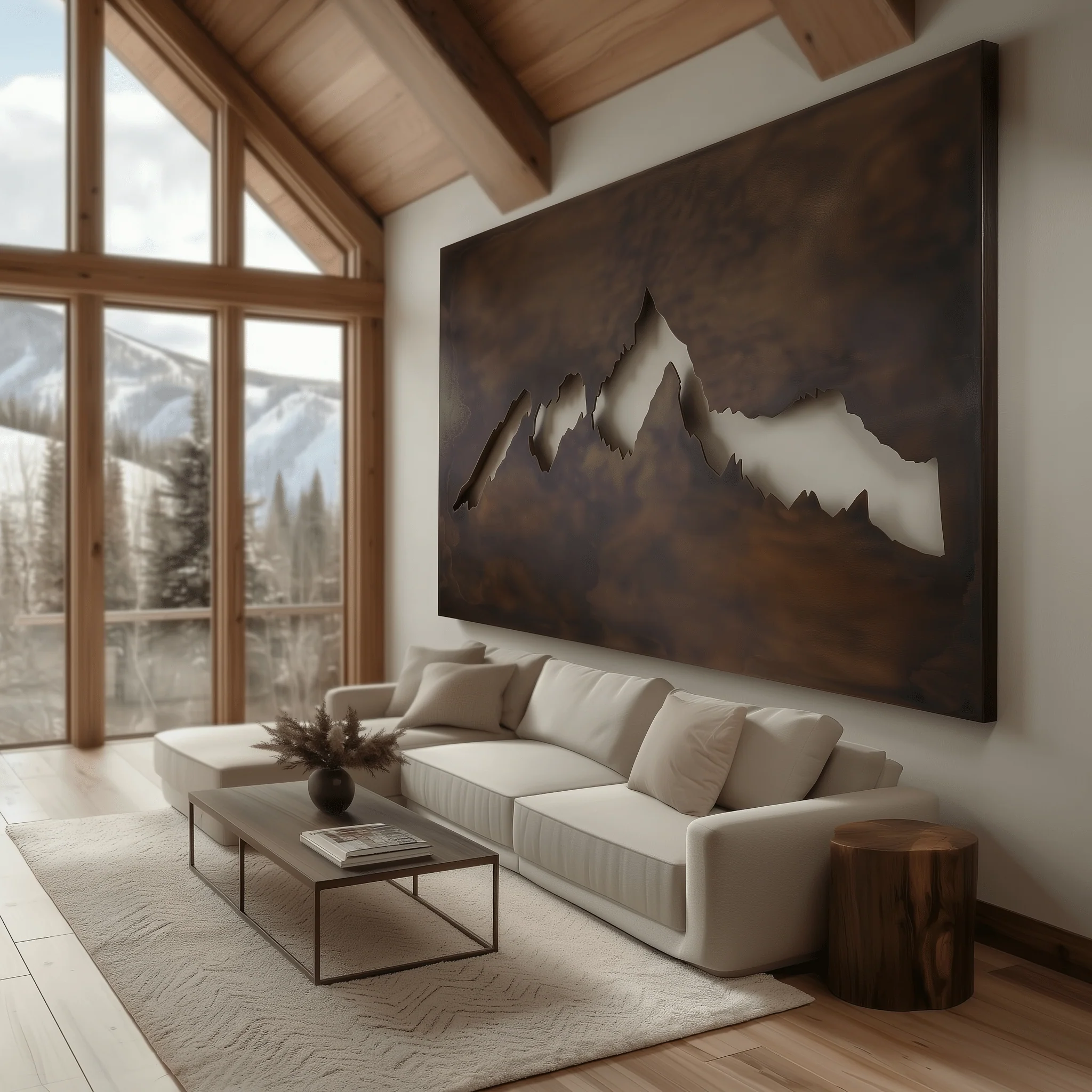
The Grand Teton — The most architecturally recognizable of the Anthem landscapes. The Grand Teton’s distinctive profile in dimensional steel reads immediately as significant wall art — the kind of piece that anchors a room.
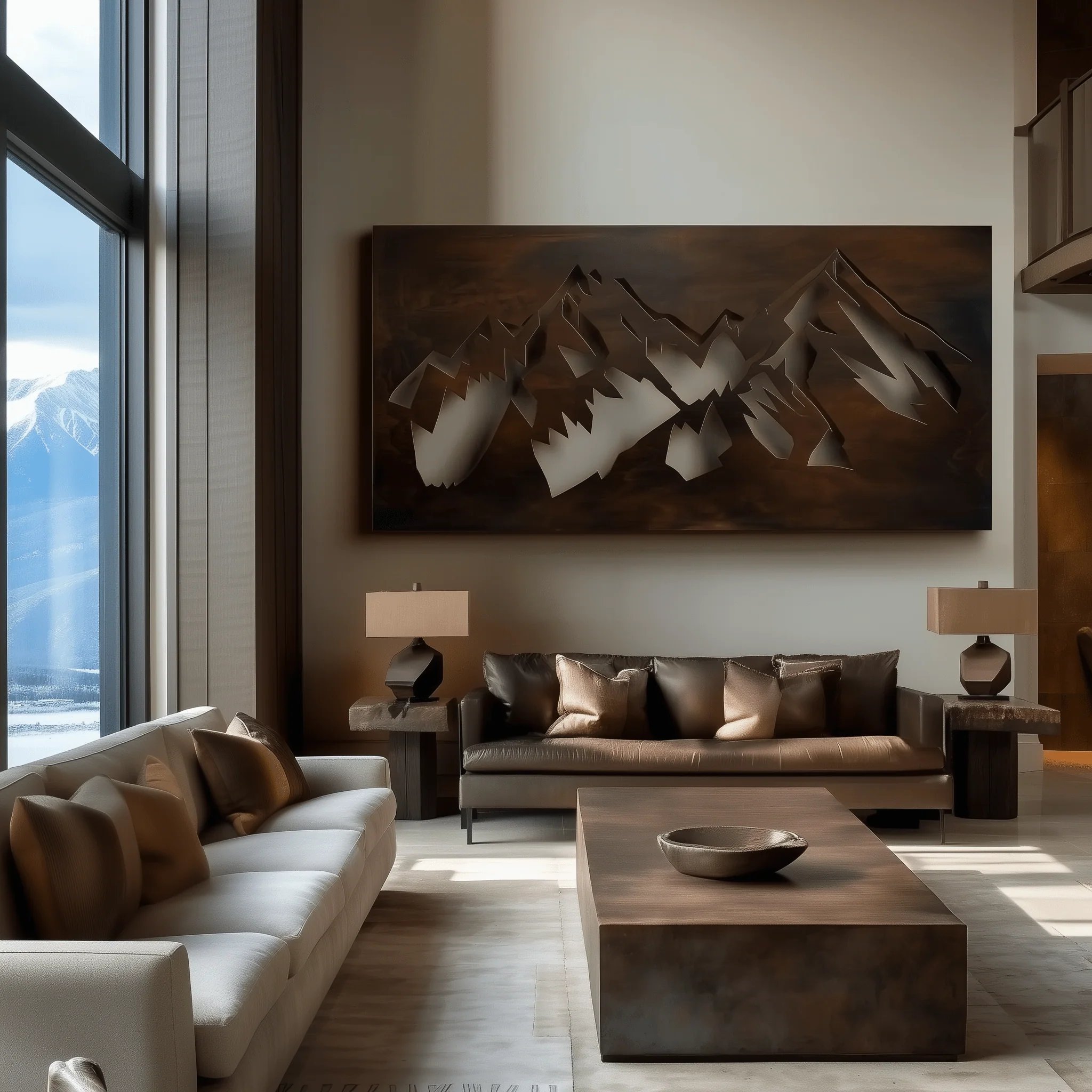
The Fairway — A more fluid, abstract mountain form than The Crestfall or The Grand Teton. Works well in living rooms where the aesthetic is more contemporary or where you want organic form without a literal landscape reference.
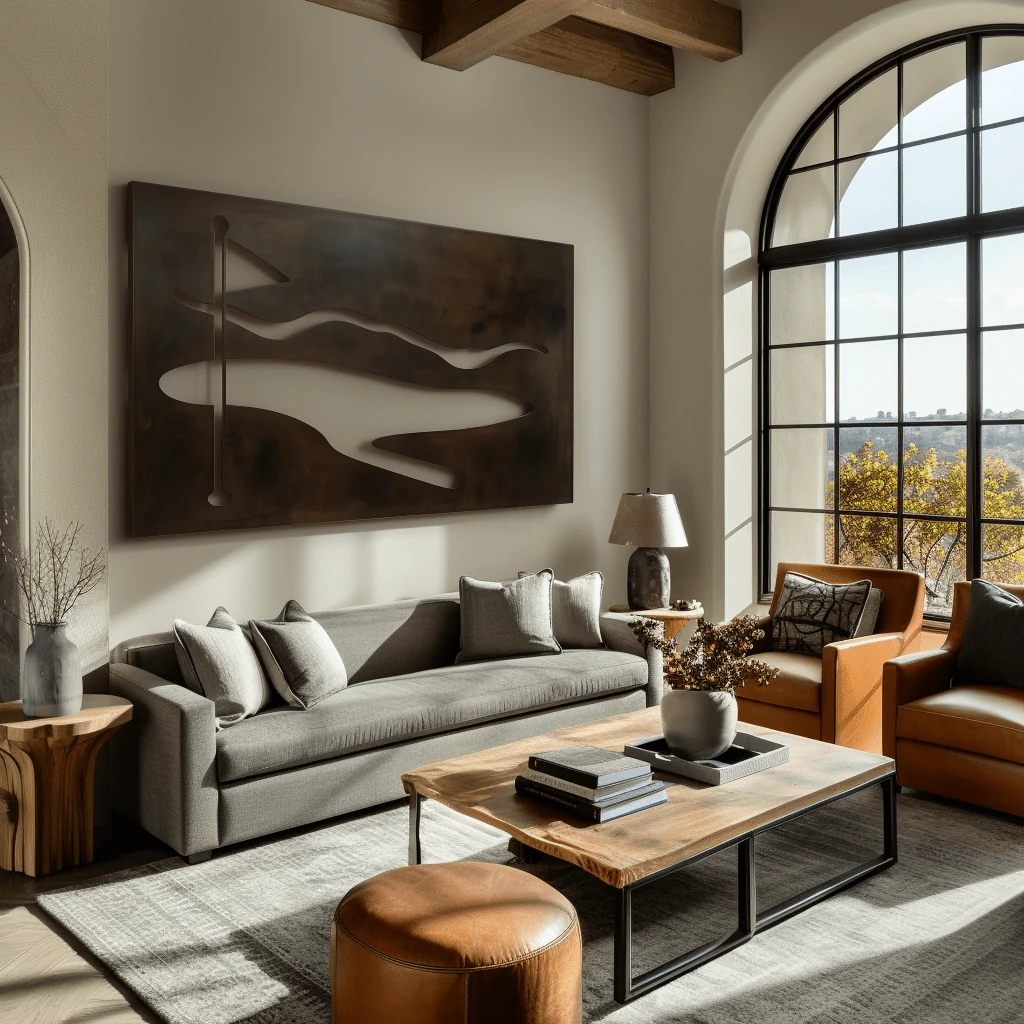
The Wrangler — A wider, more expansive ridgeline silhouette suited to walls that need significant horizontal coverage — above a long sofa or across a wide fireplace wall.
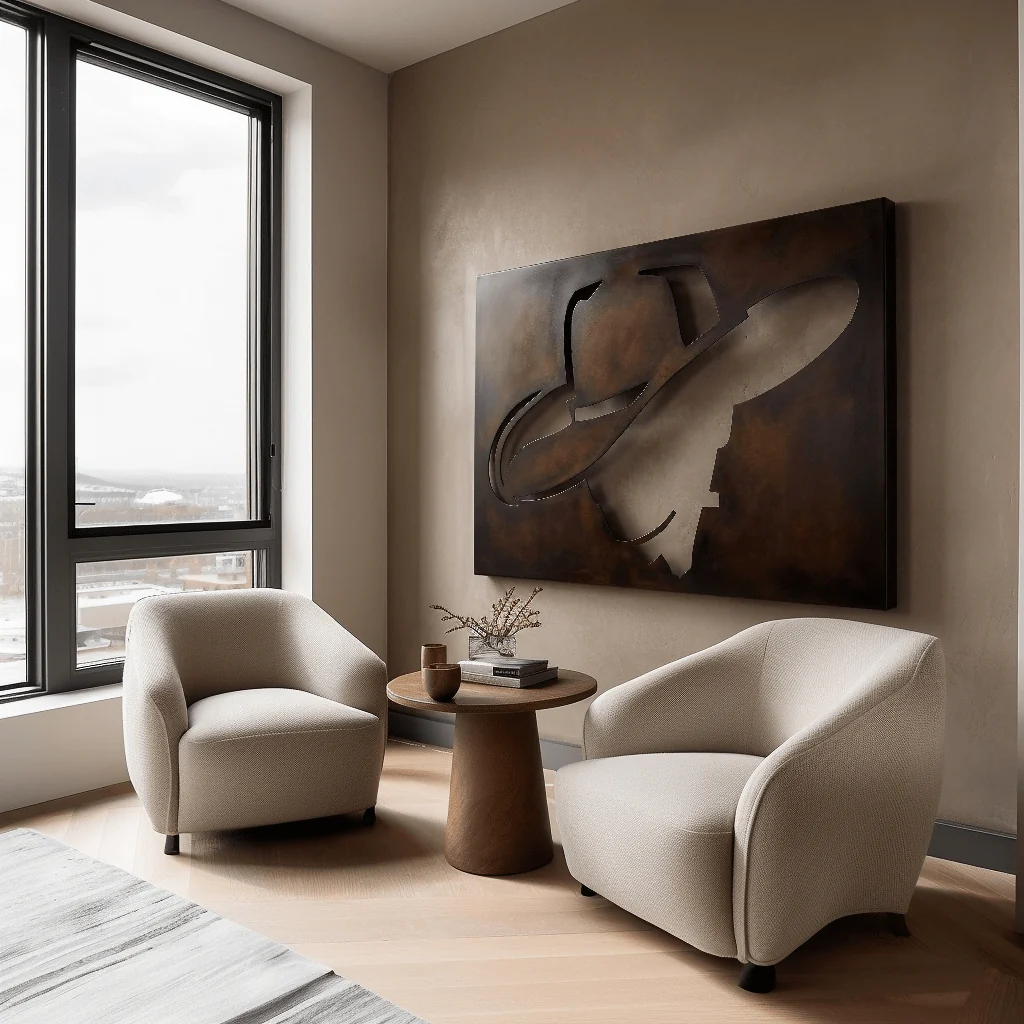
The Voyager — A more dynamic, asymmetric composition suited to living rooms with a more eclectic or collected aesthetic. The irregular form reads as interesting from multiple distances.
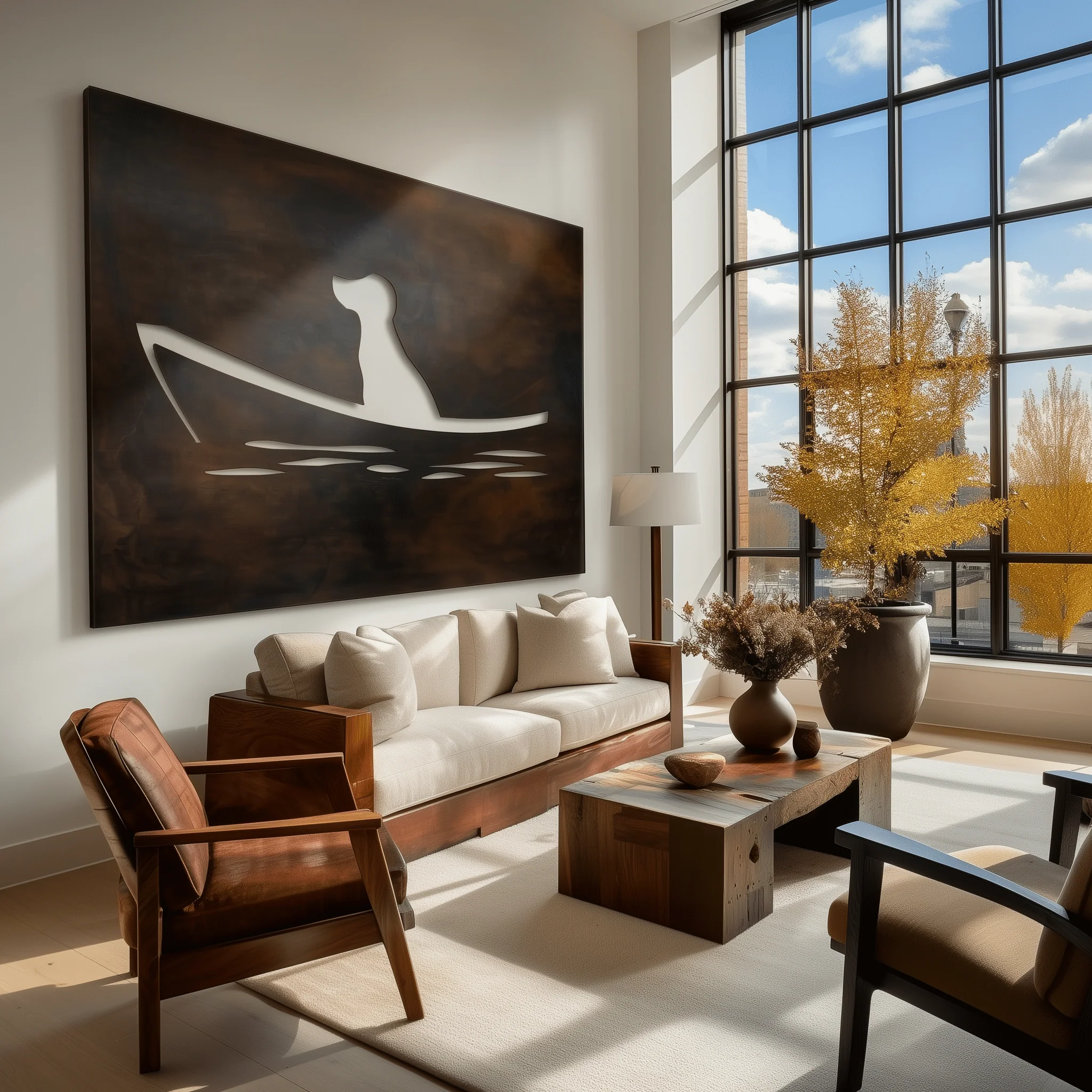
Sizing for Above the Sofa
The most reliable rule: the art should be approximately two-thirds the width of the sofa below it. For a standard 84-inch sofa, that means art in the 55–60 inch range. For a sectional, scale up accordingly.
Anthem pieces are available in multiple sizes — measure your sofa and wall before selecting, and consider the wall’s height as well as width. A piece that’s wide but short will look like a stripe; a piece with appropriate vertical presence will feel like a design decision.
Finish Considerations
Anthem’s Umber patina — dark brown, matte, smoky — works in the widest range of living room palettes. It reads warm against cream and ivory, sophisticated against dark walls, and natural against wood and linen. If your living room runs cooler (grays, blues, contemporary palette), ask about other finish options.
Hanging Large Metal Art
Heavy metal art requires proper wall anchors and stud location. Use a stud finder before committing to a position. For pieces over 20 lbs, anchoring into at least one stud is strongly recommended. The center of the piece should sit approximately 8–10 inches above the sofa back — not at eye-level standing (which positions it too high when seated) but at a height that makes visual sense from the seated position where you’ll actually experience it.
Level is non-negotiable for landscape-format art. A slight tilt on a ridgeline silhouette is immediately visible. Use a level, not your eye.