You're probably here because you're trying to decide between wallpaper and paint. Maybe you've already picked up samples of Sherwin-Williams Agreeable Gray or Alabaster — the reliable choices, the ones that work without drama. Maybe you're looking at Universal Khaki, their 2026 Color of the Year, and thinking it might finally be time to do …
You’re probably here because you’re trying to decide between wallpaper and paint. Maybe you’ve already picked up samples of Sherwin-Williams Agreeable Gray or Alabaster — the reliable choices, the ones that work without drama. Maybe you’re looking at Universal Khaki, their 2026 Color of the Year, and thinking it might finally be time to do something different.
Here’s the thing: paint is fine. Agreeable Gray is a perfectly good color. Alabaster is beautiful. But fine and perfectly good are not the things you’re actually looking for when you start redecorating a room. You’re looking for a room that feels designed — that feels like it was built for you rather than assembled around what seemed safest.
Wallpaper gets you there in a way paint can’t. Here’s exactly why.
What Paint Can Do
Paint is fast, flexible, and relatively reversible. A gallon of Sherwin-Williams Alabaster costs about $85 and covers most rooms in a single coat over primer. If you don’t like it, you repaint. The process is a weekend.
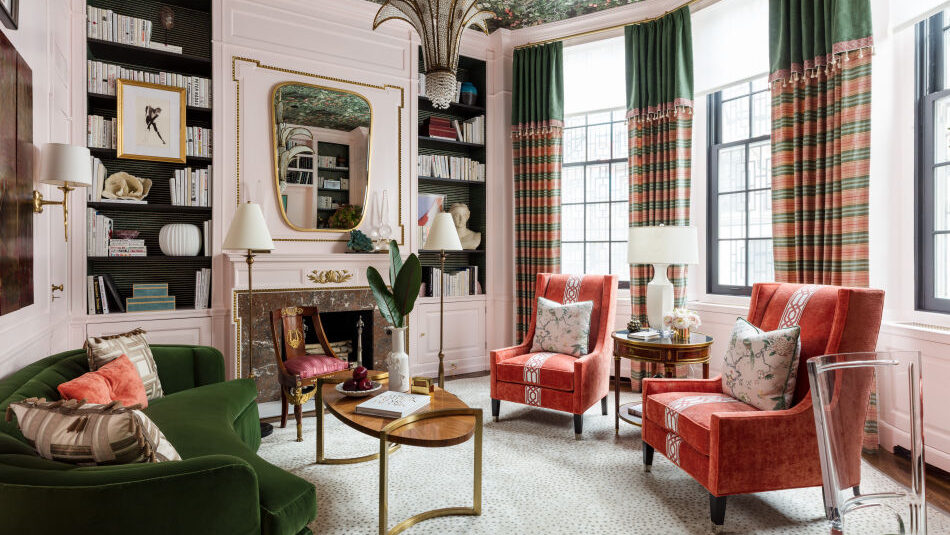
Paint also does one genuinely design-forward thing that wallpaper doesn’t: color drenching — running the same color across walls, ceiling, and trim — creates an enveloped, atmospheric quality that’s been one of the most significant design moves of the last several years. Deep Sherwin-Williams colors like Naval, Rockwood Red, or Roycroft Copper Red, taken across every surface, produce rooms that feel genuinely considered.
None of this is wrong. But it has a ceiling — literally and figuratively. Paint provides color and, in textured finishes, a degree of surface quality. It doesn’t provide pattern, illustration, depth of a printed surface, or the particular quality that comes from something designed with visual complexity.
What Paint Can't Do
A wall painted Agreeable Gray is a gray wall. It’s a pleasant, versatile, well-undertoned gray wall, and it will look good for years. But it will never get more interesting than it was on day one. It will never give you something new to notice when you walk into the room. It will never make a guest stop and look at the wall.
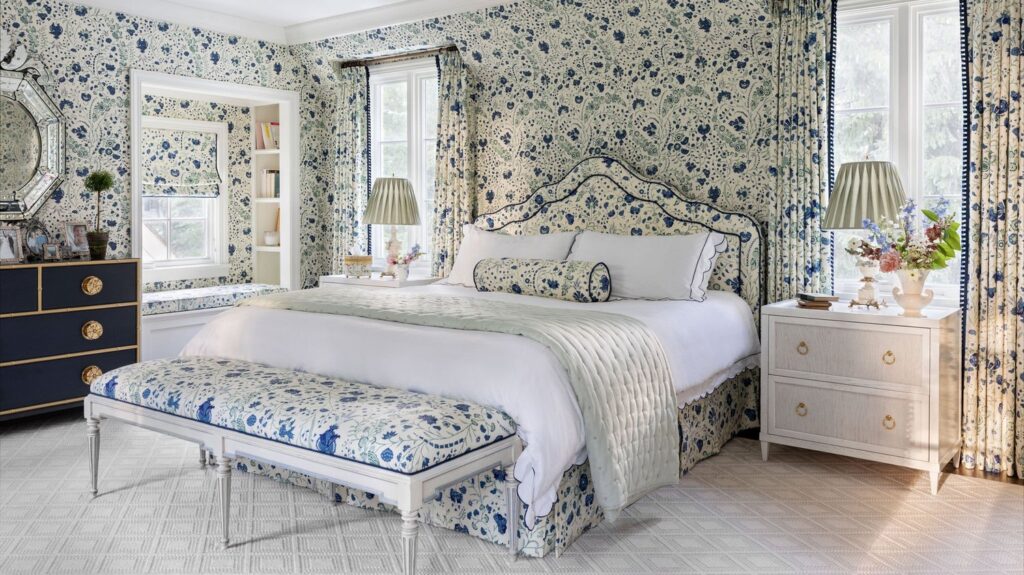
Wallpaper does all three. A botanical pattern rewards close inspection in a way flat paint never can — the detail in the illustration, the relationship between the ground color and the printed elements, the way the pattern repeats but never mechanically. A room with wallpaper gives you something to look at that paint simply cannot provide.
This matters more in some rooms than others. In a bathroom you use for two minutes at a time, a beautiful painted color is exactly enough. In a dining room where you sit facing the same wall for hours over the course of a year, a wall that has nothing to offer beyond its color is a missed opportunity.
The Depth Argument
Here is the single most compelling case for wallpaper over paint: texture and depth.
Even the most sophisticated paint finish — eggshell, satin, full-gloss — is a flat surface. It catches light consistently. It reflects uniformly. There’s no surface variation to create the visual depth that dimensional materials produce.
A quality wallpaper has relief, texture, and tonal variation built into its surface. A grasscloth wallpaper is literally woven fiber — the individual strands catch light differently at different angles, creating movement across the wall throughout the day. A printed botanical has color variation that shifts under different light. A faux-bois or linen-look paper creates material complexity that no paint finish replicates.
This is the reason wallpapered rooms photograph better than painted rooms. It’s not just pattern — it’s surface depth, and surface depth is what makes a wall look like a design decision rather than a background condition.
The Character Argument
Every room with Agreeable Gray on the walls looks like a room with Agreeable Gray on the walls. That’s not entirely fair — Agreeable Gray in a well-designed room looks excellent — but the color itself contributes zero specificity. It’s the same color in fifteen million American homes.
Wallpaper is inherently specific. A pattern is a design, and a design was made by someone with intentions about what it would look like and what it would feel like. When you choose wallpaper, you’re participating in that design intention. The room becomes yours in a way that a universally popular paint color can’t achieve.
The most personal rooms — the ones you remember years after visiting — almost always have a surface treatment that goes beyond paint. It’s not coincidence.
The Practical Objections, Addressed
“Wallpaper is harder to install.” – True for traditional paste wallpaper. Not true for quality peel-and-stick, which has improved dramatically in recent years. Brands like Lemon Park and Painted Paper produce peel-and-stick papers with genuine textile texture that install cleanly and remove without wall damage. The installation is more involved than rolling paint, but it’s a genuinely achievable DIY project for anyone who can hang a picture straight.
“Wallpaper is harder to change.” – Peel-and-stick is as reversible as paint — more so, because it doesn’t require a full repaint to cover. Traditional wallpaper is more committed, but the rooms most people use it in (dining rooms, bedrooms, powder rooms) are rooms they change least frequently.
“Wallpaper is more expensive.” -A quality roll of wallpaper ranges from $45 to $85 for most patterns. A standard bedroom requires four to six rolls. Total material cost: $180–$510. Compare that to: a gallon of Sherwin-Williams Emerald interior paint ($95) plus primer plus the labor of painting (if hired) or your weekend (if DIY). The cost difference is real but narrower than most people assume, and the results are not comparable.
“What about rooms where paint makes more sense?” – Yes. Kitchens with a lot of steam, children’s rooms that will need to change, rooms you genuinely want to repaint frequently — paint is the right answer. The argument is not that wallpaper should replace paint everywhere. It’s that for the rooms where you want genuine design impact and you’re currently defaulting to a Sherwin-Williams color because it’s easier, wallpaper deserves serious consideration.
When to Use Both
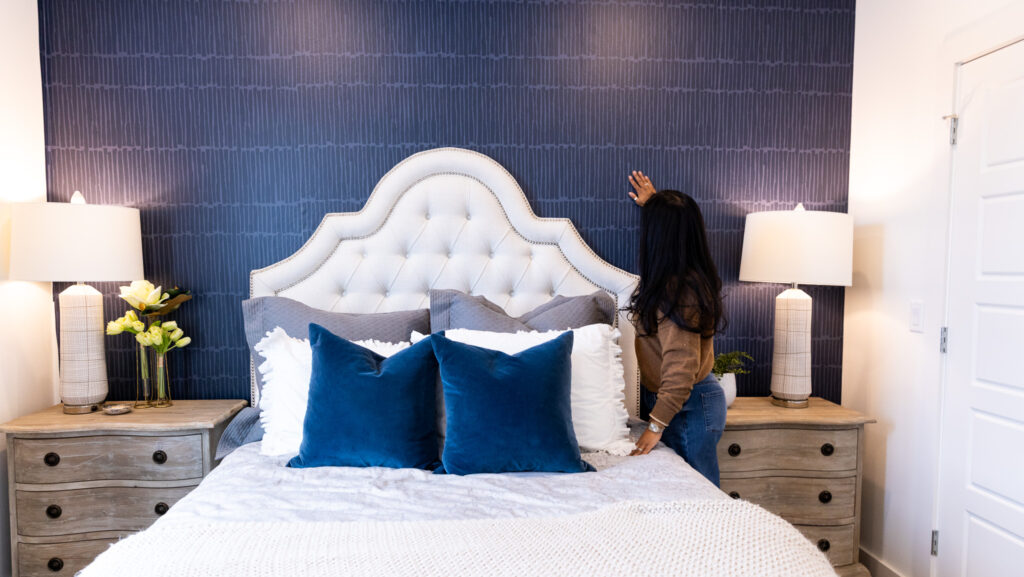
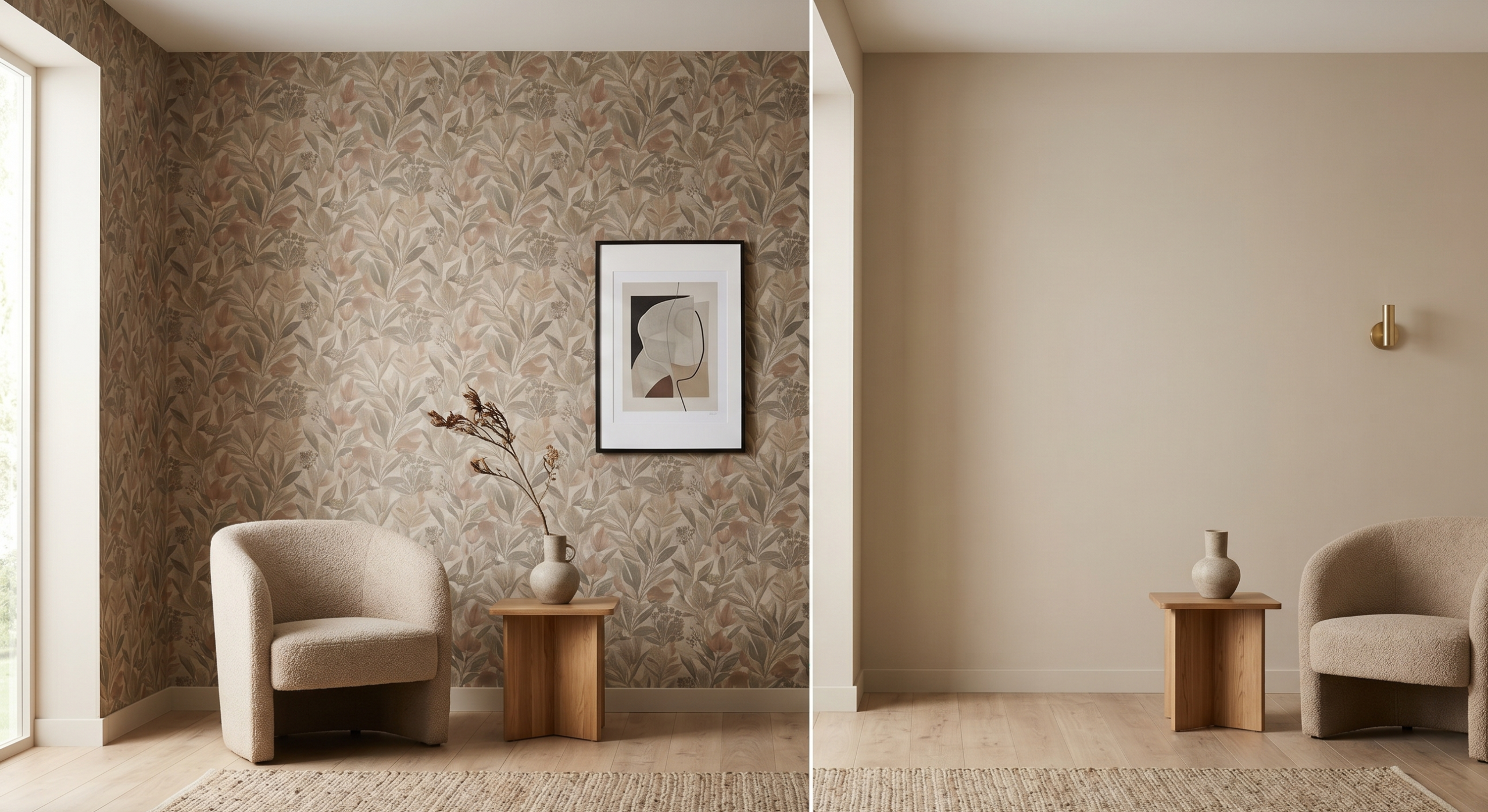
The most considered rooms use paint and wallpaper together. The most common and most effective approach: wallpaper on one wall (typically the headboard wall in a bedroom, the wall behind the sofa in a living room, or all four walls in a powder room), paint in a coordinating color on the remaining walls.
The paint color is pulled from the wallpaper rather than chosen independently. Sherwin-Williams’ fan deck is genuinely useful here — bring a wallpaper sample to the store and match the background or the dominant accent color. Sherwin-Williams Antique White or Creamy pulled from a warm botanical ground. Sherwin-Williams Aged Wine pulled from a dark-ground floral. The combination creates rooms that read as designed rather than decorated.
The paint does the background work. The wallpaper does the character work. Neither is wasted.
The Honest Bottom Line
If you’re standing in Sherwin-Williams with a chip of Agreeable Gray in your hand and a vague sense that the room you’re decorating deserves something more interesting, trust that instinct. Agreeable Gray is a good color. It is not, however, an interesting room.
The room you’re picturing when you imagine the finished space — the one that makes you feel something when you walk into it — almost certainly has more going on than a single paint color. Wallpaper is how you get there. The commitment is slightly higher. The result is significantly better.
Start with a sample. Painted Paper and Lemon Park both offer sample sizes that let you see the pattern on your actual wall, in your actual light, before you commit. That $9 sample is the most useful purchase in the wallpaper process — and the thing most likely to make the Sherwin-Williams trip unnecessary.
Browse Painted Paper: https://paintedpaper.com/collections/shop-all-wallpaper
Browse Lemon Park: https://lemonpark.com/collections/all-wallpape