The rug is the most important decision in most living rooms and the one people get most wrong. Here’s the complete guide — size, pattern, material, and the specific collections worth buying.
The rug is the room’s foundation — literally and visually. Everything else responds to it: the sofa choice, the furniture arrangement, the color palette that works or doesn’t. When it’s wrong — too small, too plain, too synthetic — the room never comes together no matter how good the rest of the furniture is. When it’s right, the room resolves.
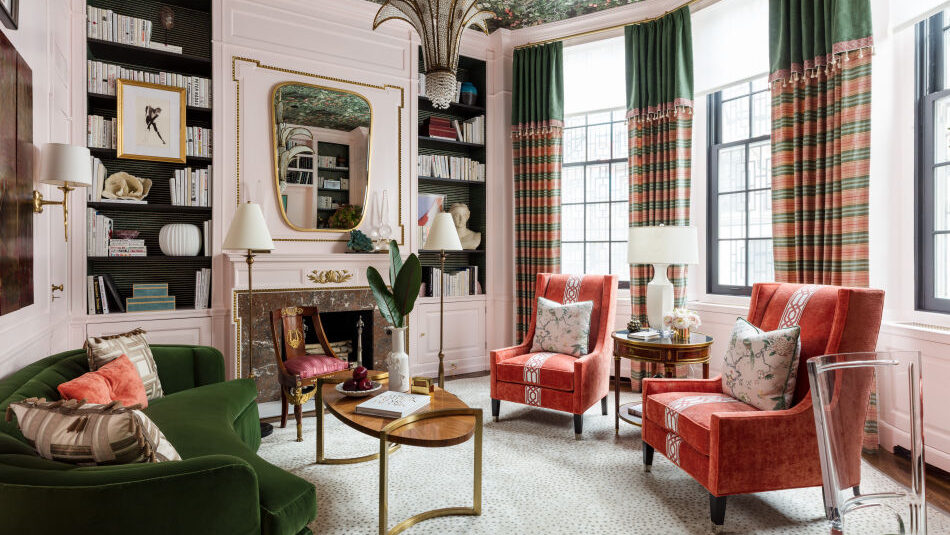
The single most common rug mistake isn’t pattern choice or color. It’s size. Most people buy rugs that are too small for their rooms, leaving the furniture floating on bare floor around the edges of an island of carpet. The rule: in a living room, all four legs of the sofa should be on the rug, or at minimum the front two. The rug should be 8×10 for most living rooms; 9×12 for larger ones.
The Best Collections Right Now
Amber Lewis x Loloi — Molly Collection — vintage-inspired area rugs with the look of hand-knotted antiques at a fraction of the cost. Power-loomed with nuanced tones and low, textured pile that looks genuinely aged, not fake-aged. OEKO-TEX certified. Designer Amber Lewis is known for sourcing actual vintage rugs for her projects at $10k+; this collection delivers the same visual quality from ~$300–$700 depending on size. Available on Amazon, Wayfair, and Rugs Direct.
→ Loloi Rugs — Amber Lewis x Loloi collections
→ Shoppe Amber Interiors — curated rug selection
Amber Lewis x Loloi — Bowie Collection — hand-crafted wool flatweave with geometric motifs and whipstitched edges. More organic and tactile than the Molly. GoodWeave certified. The right rug for organic modern and wabi-sabi rooms that want texture without pattern.
Pottery Barn Chunky Wool Jute Rug — hand-loomed from 60% jute and 40% wool in India, the standard entry-level natural fiber rug that gets better with age. Versatile enough to work under almost anything. The natural color is the pick — it goes with every organic modern palette.
→ Pottery Barn Chunky Wool Jute Rug — from $149
The Pattern Question
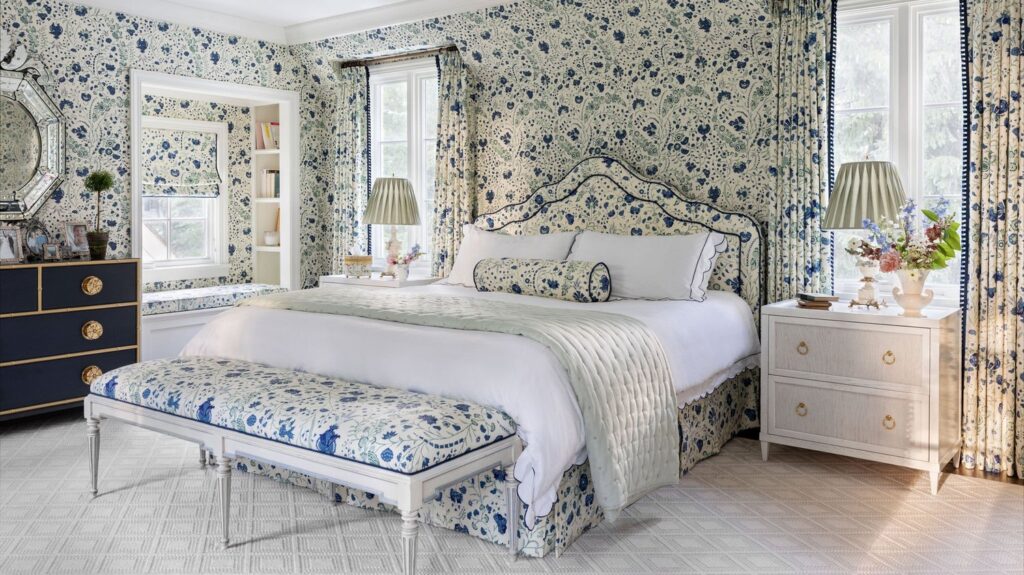
A patterned rug and patterned wallpaper can share a room — but they need to share a color palette, not compete for attention. The rule: the larger pattern (usually the wallpaper) should have a quieter ground, and the smaller pattern (usually the rug) can have more contrast. Or: bold wallpaper with a solid-toned rug, and let the wallpaper carry the room.
Painted Paper’s Rosalind Floral — a rich, heritage-quality floral in muted jewel tones — creates a living room wall that pairs beautifully with a vintage-inspired rug in the same warm palette. The warm reds and creams in the Amber Lewis Molly collection coordinate with the floral’s undertones.

→ Painted Paper Rosalind Floral Wallpaper
For rooms that want a bolder, more graphic wallpaper alongside a textural rug: Painted Paper’s Montgomery — a richly patterned, architectural repeat — provides the visual weight that makes a natural fiber rug feel anchored rather than simple.

→ Painted Paper Montgomery Wallpaper
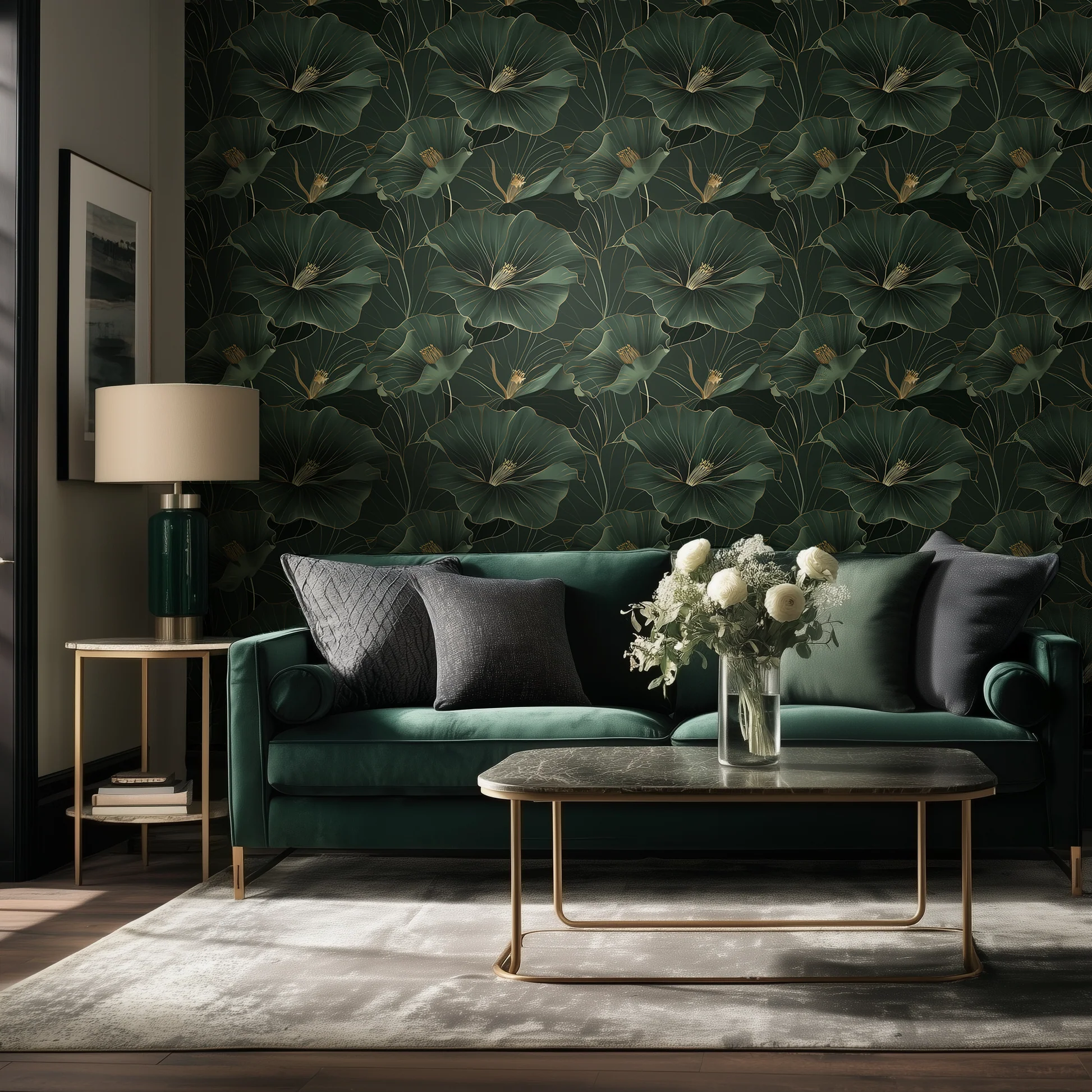
From Lemon Park: Forest Path — deep woodland botanical — creates a living room wall that makes a dark vintage-style rug feel like a natural extension of the room rather than a floor covering.

→ Lemon Park Forest Path Wallpaper
The Art Anchor
A room with a strong rug and strong wallpaper needs wall art that has physical presence rather than decorative prettiness. Anthem Classic’s dimensional metal wall art — hand-welded, Umber patina — holds its own against pattern without competing with it.

→ The Wrangler by Anthem Classic — free shipping