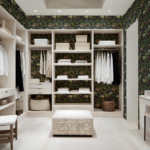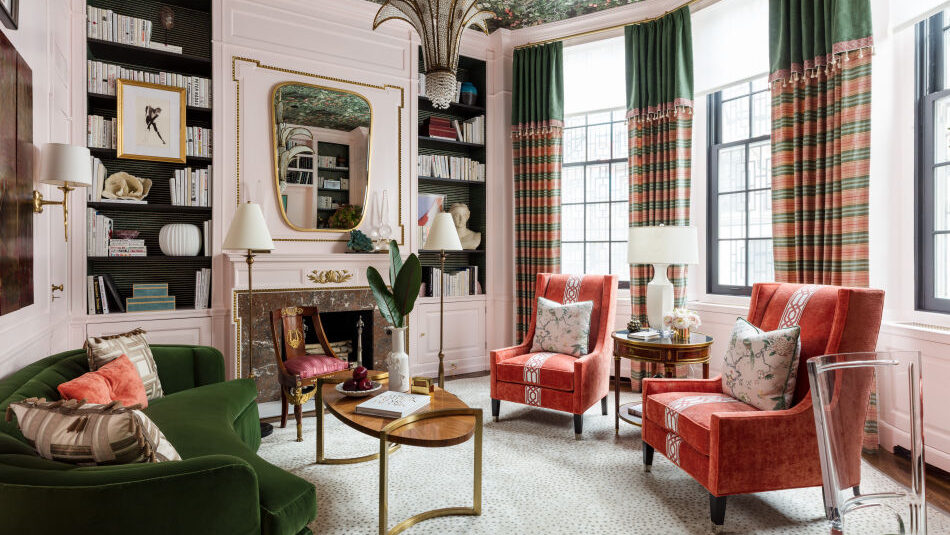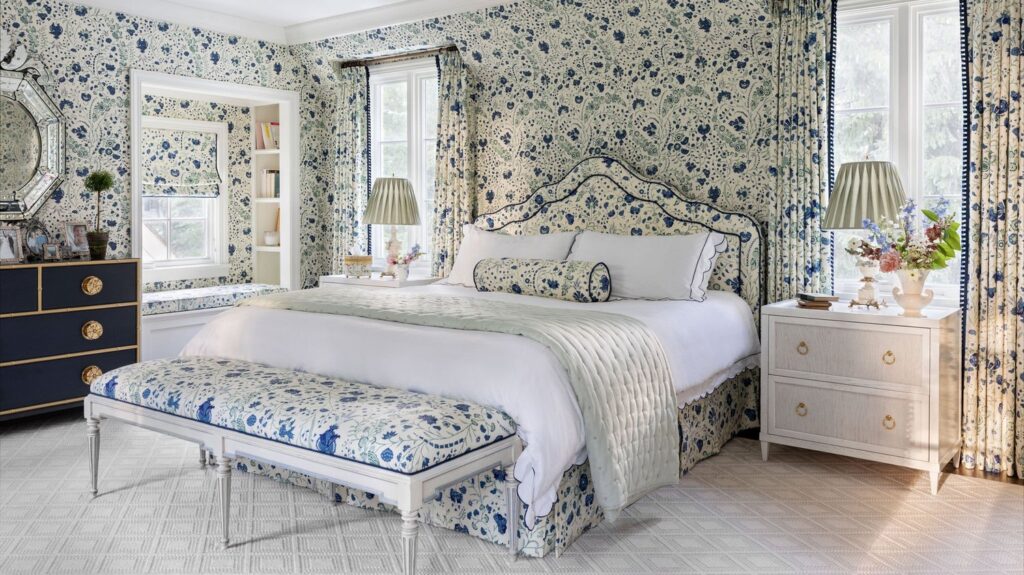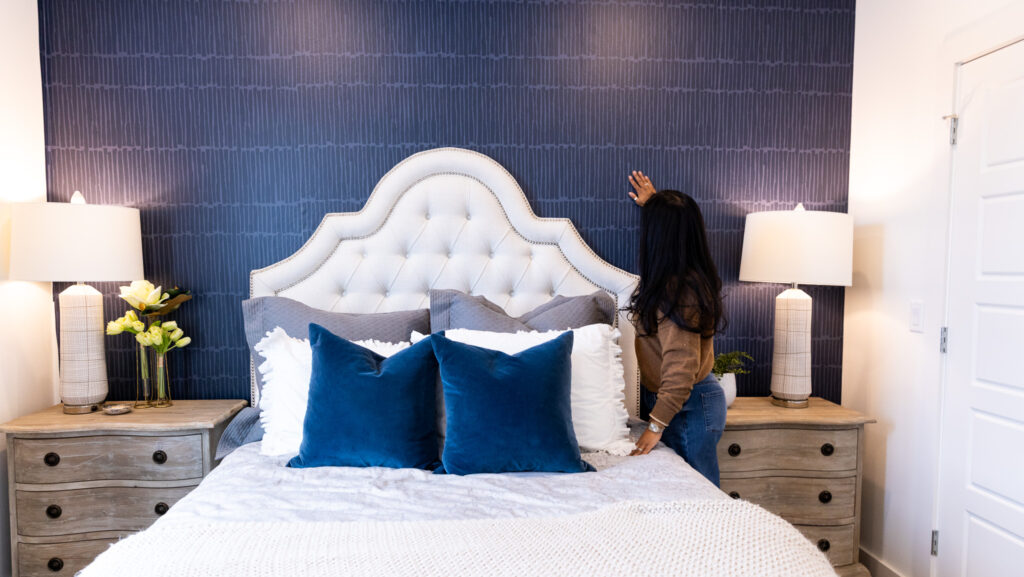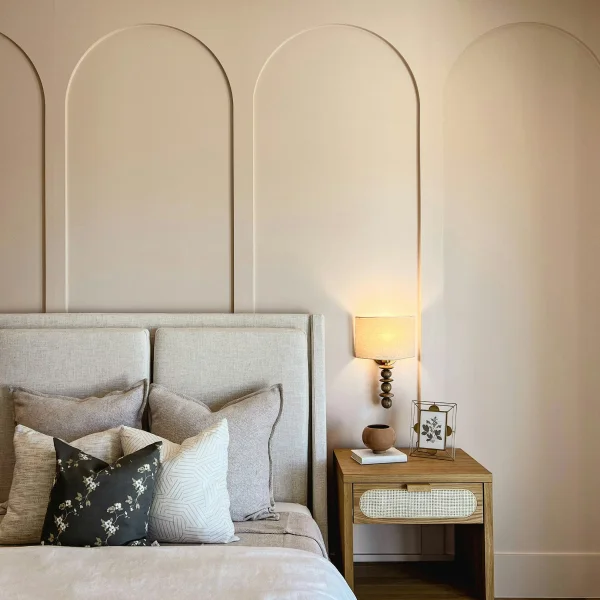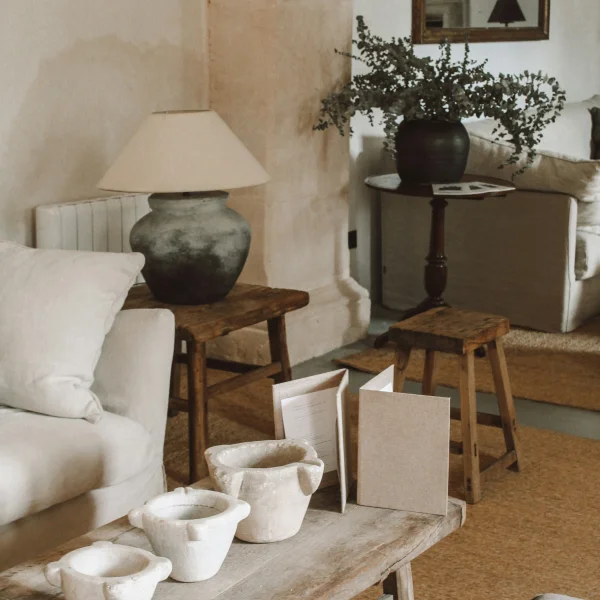
A product once dismissed as a renter’s compromise has exploded into a multi-billion-dollar market — transforming nurseries, powder rooms, and entire homes along the way. Here’s how premium woven peel-and-stick wallpaper went from dorm-room afterthought to the design industry’s fastest-growing category.
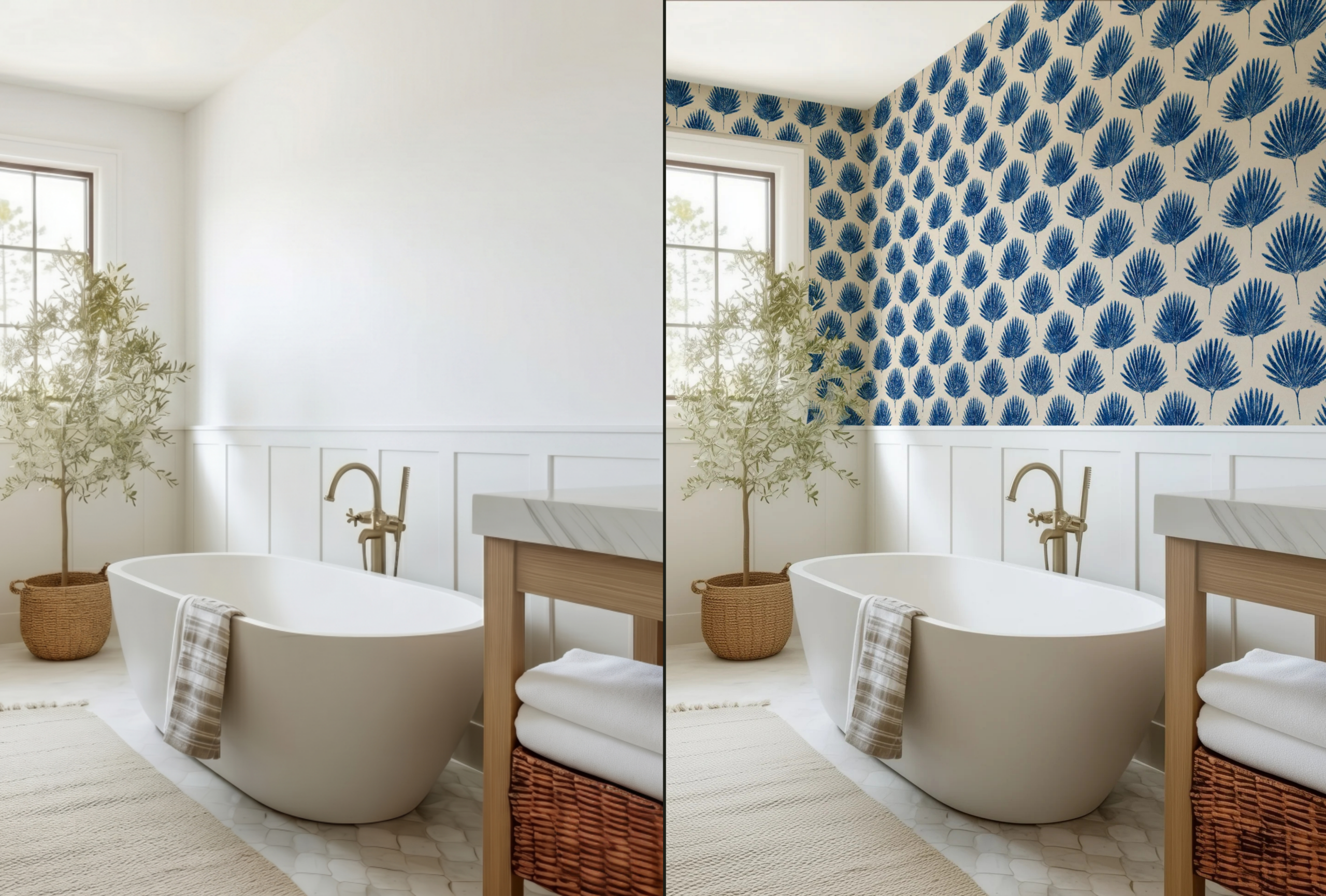
The rolls of peel-and-stick wallpaper arrived on a Thursday. By Saturday morning, she was standing barefoot on the cool tile of her half-bath — a room she’d avoided decorating for two years because it felt too small to matter — pressing the first panel against the wall above the vanity. The pattern was a sprawling midnight botanical, dark navy shot through with cream magnolias and pale green fronds. As the woven fabric made contact with the drywall, something shifted. Not just on the wall. In her. The wallpaper caught and held, the matte surface absorbing the overhead light instead of bouncing it back like plastic. She smoothed it with her palm, then a flat tool, working from center to edge, and the bubbles — the ones she’d been warned about by every internet horror story — simply didn’t appear. Four hours later, she stood in the doorway and did not recognize the room. Her husband, passing behind her with a coffee mug, stopped. Looked in. Said nothing for a full five seconds. Then: “Can we do the bedroom next?”
That moment — the pause, the recognition, the immediate hunger for more — is playing out in hundreds of thousands of American homes right now. Peel-and-stick wallpaper in 2026 is not what you think it is. It’s not the plasticky contact paper your college roommate stuck to her rental kitchen backsplash. It’s not the curling, bubbling vinyl that gave removable wallpaper its bad reputation a decade ago. So what is it now? It’s a self-adhesive wall covering built on woven fabric — not vinyl — that applies without paste, repositions during installation, and removes cleanly without damaging walls. What’s happening is a material revolution wrapped inside a cultural one, driven by people who want their homes to look extraordinary and who refuse to believe that beauty requires a contractor, a paste bucket, or a permanent commitment.
Best Peel-and-Stick Wallpaper Market Growth: The Numbers Behind the Trend
The removable wallpaper market was valued at $3.2 billion in 2024, according to a Future Market Insights industry forecast published that year. By 2034, the same report projects it will reach $5.8 billion, growing at a 6.1% compound annual rate. A separate analysis from Market Research Future (2023) valued the peel-and-stick segment at $2.5 billion, on pace to hit $4.8 billion by 2032 at 7.2% annually.
In 2023 alone, peel-and-stick wallpaper grew roughly 30% year-over-year in developed markets, a figure cited across multiple industry analyses that year. No other decorating category is moving this fast.
Zoom out further and the gap gets dramatic. The global wallpaper market reached $13.07 billion in 2025 (per Grand View Research), with North America commanding 31.2% of that total. But here’s the number that should stop you cold: according to industry trade data compiled by the Wall Covering Association, roughly 80% of homes in key Asian markets — Japan, South Korea, China — use wall coverings. In the United States, that figure is less than 10%.
Nine out of ten American walls are bare.
That statistic deserves more than a passing glance, because it raises a question that goes beyond market opportunity: What is it about American decorating culture that treats walls as afterthoughts? We’ll obsess over a sofa for weeks, agonize over cabinet hardware, spend actual money on throw pillows — and then leave 90% of our vertical surfaces as blank drywall painted Agreeable Gray. Part of it is practical (wallpaper was historically expensive and permanent), but part of it is something stranger: a kind of aesthetic timidity, a fear that putting something bold on the wall is a commitment we might regret. Peel-and-stick wallpaper attacks that fear directly. The residential segment already accounts for 59.2% of wallpaper applications — the appetite is there. It’s just been paralyzed by the permanence problem.
“We were terrified of wallpaper — we’re renters at heart even though we own now. The peel-and-stick changed everything. Our daughter’s nursery looks like it belongs in a magazine, and we did it ourselves in four hours.”
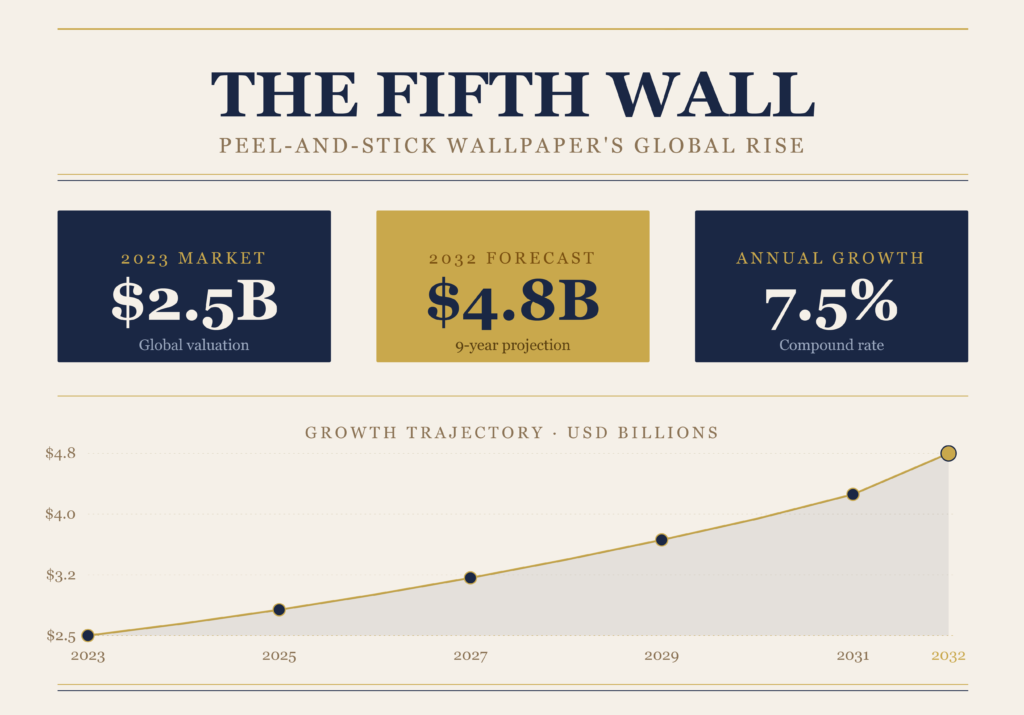
Peel-and-stick wallpaper market growth infographic 2023 to 2032
Woven Fabric vs. Vinyl: The Material Science That Changed Removable Wallpaper
To understand why peel-and-stick wallpaper has shed its reputation, you have to understand what was wrong with it in the first place. The early products were vinyl. Thin, shiny, PVC-laden vinyl that looked like exactly what it was: a sticker. Under warm bathroom light, it reflected a plasticky sheen. In dry climates, the edges curled within weeks. In humid ones, the adhesive softened and the panels slid. Tiny air bubbles formed constellations beneath the surface. If you ran your fingertip across it, you felt nothing — just slick, lifeless film.
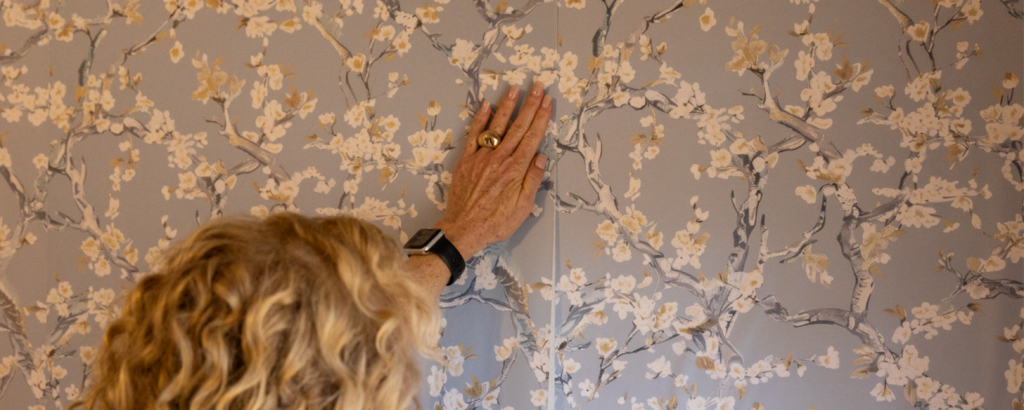
The product that exists now is a different material entirely. The best peel-and-stick wallpaper in 2026 is built on woven fabric substrates — not vinyl, not paper, but a textile. Painted Paper, the largest wallpaper site on the internet, uses a proprietary woven poly fabric that has become a reference point in the industry. Pick up a swatch and you notice it immediately: the surface has a matte, organic texture that catches light the way raw linen does. There’s a physical weight to it that says “this is real.” The weave is visible at close range — a fine crosshatch pattern that gives printed designs a depth and warmth that flat vinyl cannot replicate.
The technical reasons this works matter. Woven fabric has inherent porosity — microscopic gaps in the textile weave that allow trapped air to escape during application rather than forming bubbles. That same breathability means the adhesive cures more evenly against the wall. The fabric itself has dimensional stability: it doesn’t stretch when pulled or contract when heated, which is why vinyl panels warp and peel at edges while woven panels stay flat. The adhesive layer uses a pressure-sensitive acrylic formulation (not the rubber-based adhesives of older vinyl products) that grips firmly under hand pressure but releases cleanly when peeled at an angle — a chemistry designed to bond with paint surfaces without penetrating or damaging them.
Painted Paper’s substrate is also PVC-free and zero-VOC — no chemical smell, no airborne toxins — which matters enormously in nurseries, bedrooms, and any enclosed space where air quality is a concern. Other brands have moved toward woven substrates too: Tempaper offers a similar fabric option in their premium line, and Spoonflower has built a business on print-on-demand fabric wallpaper. But the category’s shift from vinyl to textile is still incomplete — plenty of budget products remain vinyl-based, and the quality gap between a $15 vinyl roll and a $40-60 woven fabric panel (typical price range for premium brands) is enormous.
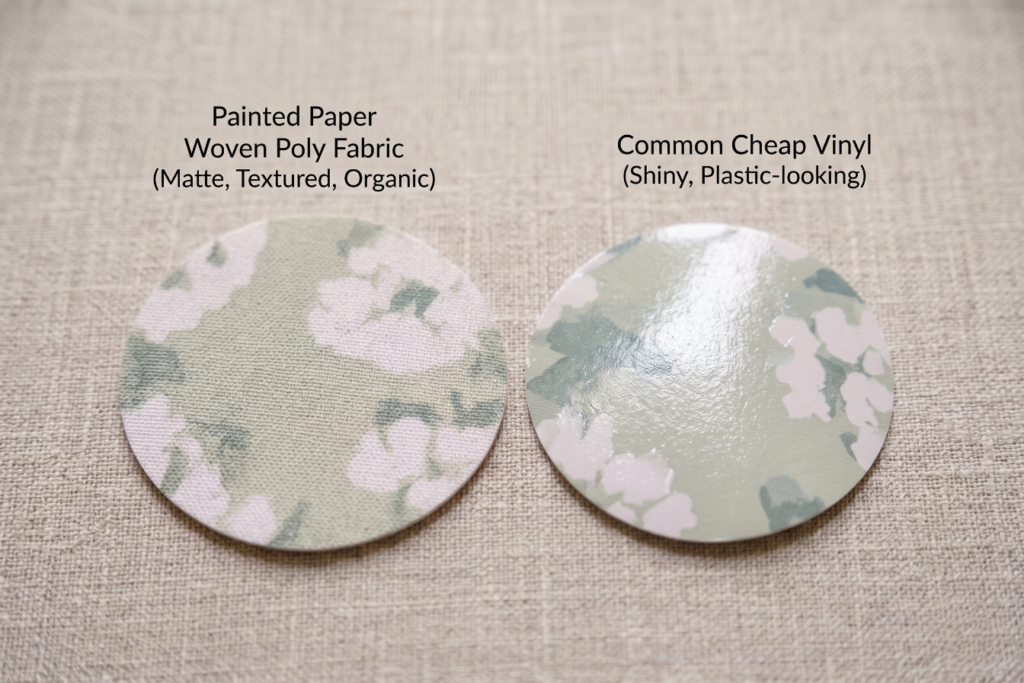
| Feature | Vinyl (Budget) | Woven Fabric (Premium) |
|---|---|---|
| Surface texture | Shiny, plastic-smooth | Matte, linen-like weave |
| Bubble resistance | Poor — air trapped under film | Excellent — porous weave releases air |
| Repositionable | Limited — stretches when pulled | Yes — dimensionally stable |
| Clean removal | Often leaves adhesive residue | Peels cleanly from painted drywall |
| VOCs / PVC | Contains PVC; may off-gas | PVC-free, zero-VOC |
| Typical price per roll | $12–$20 | $40–$65 |
This is the difference between a product that looks like wallpaper and one that looks like a sticker masquerading as wallpaper. And it’s the reason the old objections — “Doesn’t it look cheap?” “Will it damage the walls?” “Does it actually stay up?” — are answering themselves on the walls of real homes, photographed in real light, shared across millions of social feeds.
One important caveat: peel-and-stick wallpaper — even the best woven fabric — doesn’t work on every surface. Textured walls (orange peel, knockdown, heavy stucco) prevent full adhesive contact, and the paper will eventually lift. Freshly painted walls need at least three to four weeks of cure time. And in full bathrooms with showers, sustained humidity can weaken adhesive bonds over time. The product has genuine limitations, and pretending otherwise is how the category earned its bad reputation in the first place.
Best Removable Wallpaper for Renters — and Why Homeowners Are Converting Too
The conventional narrative goes like this: peel-and-stick wallpaper exists because of renters. America has 44 million renter-occupied households, and those tenants want beautiful spaces without risking their security deposits. That narrative is true — but it’s only about a third of the story.
Renters were the early adopters. They proved the concept, pushed the category into mainstream awareness, and demonstrated that removable didn’t have to mean disposable. But the real growth engine in 2026 is homeowners. These are people who could use permanent wallpaper. They choose not to.
Why? Three cultural shifts happened to converge at the same moment, and they’re tangled up with each other in ways that make the trend feel less like a marketing story and more like a generational change in how Americans relate to their spaces.
The first is design awareness. A decade of Instagram, Pinterest, and TikTok has created a population that can identify a William Morris print at twenty paces and has opinions about warm versus cool whites. People see more interiors in a single scrolling session than previous generations saw in a year of magazine subscriptions. That visual literacy breeds confidence — and restlessness. When you know what’s possible, bare walls start to feel like missed opportunities. (And remember: nine out of ten of those walls are still bare. The gap between what Americans can envision and what they’ve actually done is vast.)
The second is DIY confidence — the boom that started when millions of people were locked inside their spaces after 2020, staring at their walls, discovering they were capable of far more than they’d assumed. They painted rooms. They built shelves. They retiled backsplashes from YouTube tutorials. That confidence never went away. Peel-and-stick wallpaper is the natural next step for someone who has already conquered paint: more dramatic, more personal, and — crucially — reversible if the pattern doesn’t land the way it looked on screen.
The third is how fast trend cycles move now. The botanical maximalism that dominates in January may give way to Art Deco geometry by June. Homeowners who invest in traditional pasted wallpaper — professional installation running $4-$8 per square foot on top of the paper itself — are locked into that choice for years. Peel-and-stick lets them move with the culture. The wall becomes a canvas that gets refreshed, not a decision that gets endured.
These three shifts feed each other. Design awareness creates desire. DIY confidence removes the barrier. Fast trend cycles provide the excuse. The result: a product category growing at twice the rate of the broader wallpaper market, with homeowners — not renters — now driving the volume.
“I’ve specified wallpaper from every major brand. Painted Paper gives me the pattern library of a boutique studio with the reliability of a commercial printer. My clients love that it’s American-made.”
Why Interior Designers Now Specify Peel-and-Stick — and Who Still Won’t
For years, peel-and-stick wallpaper had a credibility problem with the trade. Interior designers wouldn’t specify it. Contractors wouldn’t install it. It was viewed as a consumer product — fine for a renter’s accent wall, unacceptable for a client paying five figures for a room design.
That boundary has largely collapsed, though not entirely. Painted Paper now counts more than 10,000 designer customers (a figure the company shares publicly on its trade program page) — professionals who specify peel-and-stick not as a compromise but as a deliberate choice. On the practical side, it simplifies installation timelines, eliminates the mess of paste application, and gives clients an easy path to future changes. On the creative side, the explosion of available patterns — and the ability to commission custom designs — has given designers a tool that matches their vision rather than constraining it.
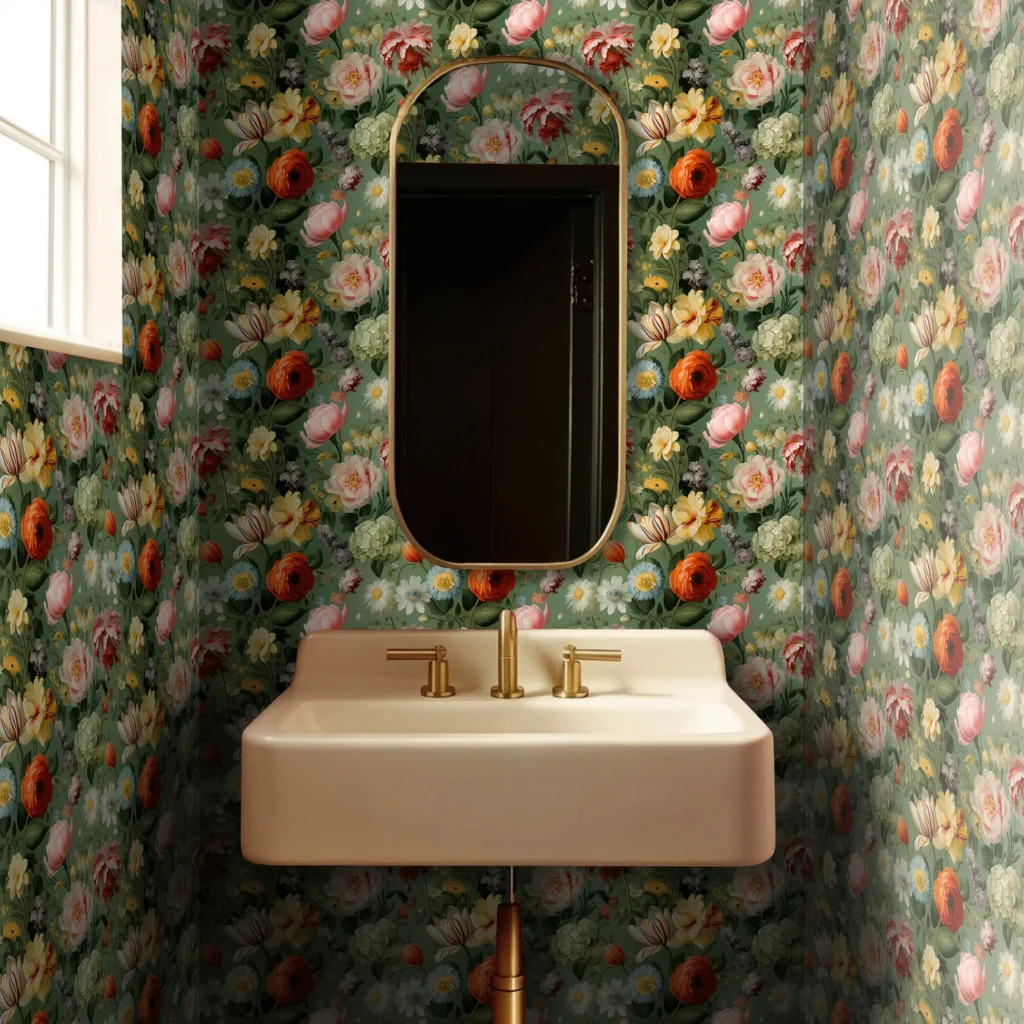
Rachel Torres, an interior designer based in Austin, Texas, specified Painted Paper’s Midnight Garden traditional wallpaper for a client’s powder room renovation. The dramatic floral on navy became, in her words, “the talking piece of the entire home” — and led to three additional client referrals. Her client’s husband, initially skeptical of bold wallpaper in any form, became the room’s most vocal advocate. He shows the powder room to every guest. He has since asked Torres to wallpaper his home office.
But not everyone is converted. Some high-end designers still view peel-and-stick as inherently inferior — and they’re not entirely wrong to be cautious. Traditional pasted wallpaper from brands like de Gournay or Fromental offers hand-painted artistry and material richness that no printed product can replicate. For a $50,000 dining room, the argument for permanent wallpaper installed by a specialist remains strong. The real disruption isn’t at the top of the market — it’s in the enormous middle, where good design was previously priced out by the combined cost of professional installation and premium paper. That’s where peel-and-stick has blown the doors open.
Painted Paper produces hundreds of custom co-designed wallpapers every month, working with designers who want patterns tailored to specific projects. This isn’t the old model of choosing from a sample book printed once a year by a European mill. This is on-demand, made-to-order manufacturing that treats each designer’s vision as the starting point.
Made-in-USA Wallpaper: The Supply Chain Advantage in Northwest Arkansas
There’s a detail about Painted Paper that reads like a footnote but functions like a moat: every roll is manufactured on-demand in Northwest Arkansas. Every one. The entire operation — design, printing, finishing, shipping — happens onshore, with American materials and American labor.
In a normal market, that’s a nice story. In 2026’s tariff environment, it’s a strategic fortress — though it’s worth asking how much the average consumer actually notices. The honest answer: they notice speed and price stability, even if they don’t connect those to manufacturing origin. An order placed today enters production in Arkansas tomorrow. Free shipping — on every order, no minimums — means the delivered cost is the sticker price.
The wallpaper industry has historically relied on overseas manufacturing, with major production centers in China, Southeast Asia, and Europe. As tariff pressures have mounted and global supply chains have grown less predictable, brands dependent on imports face rising costs and longer lead times. Painted Paper’s on-demand model also means zero dead inventory — no warehouses full of last season’s patterns waiting to be marked down. New peel-and-stick wallpaper collections launch weekly, not annually, and those designs go into production only when ordered.
The customer browsing at midnight doesn’t need to know any of this. But it’s the reason her wallpaper arrives fast, looks right, and costs what the site said it would — no surprise surcharges, no “temporarily out of stock,” no six-week backorder from a container ship delayed in a foreign port.
Best Rooms for Peel-and-Stick Wallpaper: The Powder Room Gateway
If peel-and-stick wallpaper has a gateway drug, it’s the powder room.
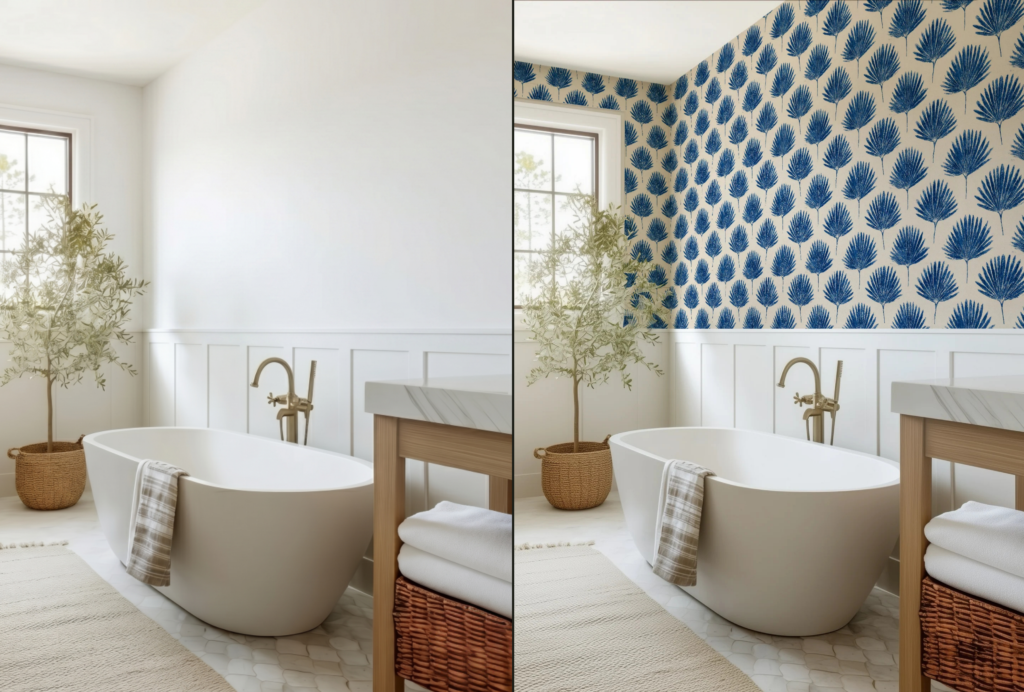
The logic is almost comically simple. A half-bath is small — typically 20 to 30 square feet of wall space, requiring only two or three rolls. The financial commitment is minimal (often under $150 for a full room). The time commitment is an afternoon. And because powder rooms are enclosed spaces with no competing furniture or bedding, they’re the one place where a maximalist pattern doesn’t just work — it electrifies.
A black-and-white toile that might overwhelm a bedroom becomes cinematic in a 4-by-6 room. A tropical palm print that feels risky in a living room feels like a vacation in a space you’re inside for ninety seconds at a time.
Industry data from the National Kitchen & Bath Association consistently shows powder rooms as the number-one entry point for first-time wallpaper buyers. The social media effect compounds this: wallpapered powder rooms generate outsized engagement compared to other room types — a small, dramatic space photographs beautifully and reads as immediately achievable. Someone sees a powder room on Instagram. They think, “I could do that.” They order two rolls. They install them on a Sunday. They photograph the result and post it. Someone else sees it. The cycle begins again.
Sarah and Michael Chen, first-time homeowners in Portland, Oregon, are a case study in this flywheel effect. Their first project was a nursery — Painted Paper’s Forest Friends peel-and-stick wallpaper, installed in a single weekend to transform a spare bedroom into a woodland scene for their daughter. Emboldened, the Chens wallpapered their powder room next. Then the home office. Three rooms, three different patterns, all installed by two people with no prior wallpaper experience and no professional help.
“The kids call it the Magic Forest. Before the wallpaper, nobody wanted to sit in that corner. Now there’s a waiting list. Books and beautiful spaces — they go together.”
Where Removable Wallpaper Goes Next — and What Could Slow It Down
The applications are already stretching beyond residential walls. At an elementary school in Denver, a librarian used Painted Paper’s peel-and-stick wallpaper to create an enchanted forest reading nook, and the district subsequently approved similar installations in three additional libraries. Custom-print orders now represent a growing share of commercial wallpaper business — a shift that reflects how restaurants rotating seasonal aesthetics, retail pop-ups refreshing monthly, and co-working spaces wanting distinct conference rooms are all discovering the core value proposition: beautiful, temporary, non-destructive, fast.
But let’s be honest about the headwinds. The category still has a perception problem. Walk into a high-end design showroom and mention “peel-and-stick” — you’ll get a raised eyebrow. Traditional wallpaper manufacturers, many of them European mills with centuries-old reputations, aren’t standing still either; several have introduced their own removable lines, and their existing dealer networks give them distribution advantages that direct-to-consumer brands have to fight for. There’s also the DIY failure rate: despite all the improvements in substrate technology, plenty of first-timers still botch their installations by skipping wall prep, applying to textured surfaces, or using cheap vinyl and blaming the entire category for the result.
The residential opportunity alone is enormous even with those obstacles. The gap between Asia’s 80% wall-covering rate and America’s sub-10% isn’t going to close in a decade. But every percentage point of closure represents billions in new demand. The global wallpaper market is forecast to reach $16.17 billion by 2030 (Grand View Research). The peel-and-stick segment, growing at nearly twice the overall rate, is positioned to capture a disproportionate share — particularly in the U.S., where renter culture, DIY appetite, and design awareness create conditions that simply didn’t exist before.
What’s really changed, though, isn’t a market or a material. It’s a mental model. For most of the twentieth century, Americans thought of walls as permanent. You picked a paint color and lived with it. You wallpapered a room and committed to that pattern for a decade. The wall was finished. Peel-and-stick wallpaper has introduced a different idea — one that a generation raised on streaming playlists and phone cases already intuitively understands. The wall is not finished. The wall is a surface that reflects who you are right now.
Imagine our homeowner, a year later. Same half-bath — same tile floor, same brass faucet, same round mirror. But the midnight botanical is gone. Not damaged, not scraped off with a putty knife and a prayer. Peeled away cleanly, rolled up, tucked into the back of a closet in case she wants it again. In its place: a warm terracotta geometric, something she saw on a Tuesday and held in her hands by Friday. The first panel goes up. She smooths it with her palm. The room, transformed. Again.

Peel-and-Stick Wallpaper FAQ
Does peel-and-stick wallpaper damage walls?
No — when built on quality woven fabric substrates, peel-and-stick wallpaper removes cleanly from properly prepared drywall without pulling paint or leaving residue. Cheap vinyl products can leave adhesive behind, so material quality matters.
How long does peel-and-stick wallpaper last?
Premium peel-and-stick wallpaper lasts for years. Woven fabric options like those from Painted Paper maintain their adhesion and color indefinitely on smooth, clean walls. You can remove and replace whenever you’re ready for a change.
Is peel-and-stick wallpaper worth it compared to traditional wallpaper?
For most homeowners and renters, yes. Peel-and-stick eliminates professional installation costs ($4–$8/sq ft), requires no paste or special tools, and repositions during application. The best woven options now rival traditional wallpaper in appearance and durability — without the commitment or the cost.
Can you use peel-and-stick wallpaper in bathrooms?
Yes — with caveats. Woven peel-and-stick wallpaper performs well in powder rooms and half-baths. For full bathrooms with showers, sustained humidity can weaken adhesive over time; ensure proper ventilation. Powder rooms remain the most popular room for first-time projects.
How do you install peel-and-stick wallpaper?
- Ensure walls are clean, smooth, dry, and cured (at least 3–4 weeks after painting).
- Peel the backing partially from the top of the panel.
- Align the top edge at your ceiling or start line.
- Smooth downward from center to edges using a flat tool or your palm, releasing the backing gradually.
- Trim excess at the baseboard with a sharp blade.
- Repeat with the next panel, matching the pattern at the seam.
The woven fabric repositions easily if you need to adjust. Most rooms take two to four hours for a first-timer.
What surfaces does peel-and-stick wallpaper NOT work on?
Avoid textured walls (orange peel, knockdown, heavy stucco), unpainted drywall, freshly painted surfaces (wait 3–4 weeks), and porous surfaces like exposed brick. Smooth, painted drywall in good condition is the ideal surface.